


Brain cancer is a tumor formed by the malignant proliferation of cells within brain tissue, comprising primary tumors originating in the brain and secondary tumors that have metastasized from other parts of the body.Symptoms vary depending on the tumor's location, size, and growth rate.
Global prevalence of brain cancer
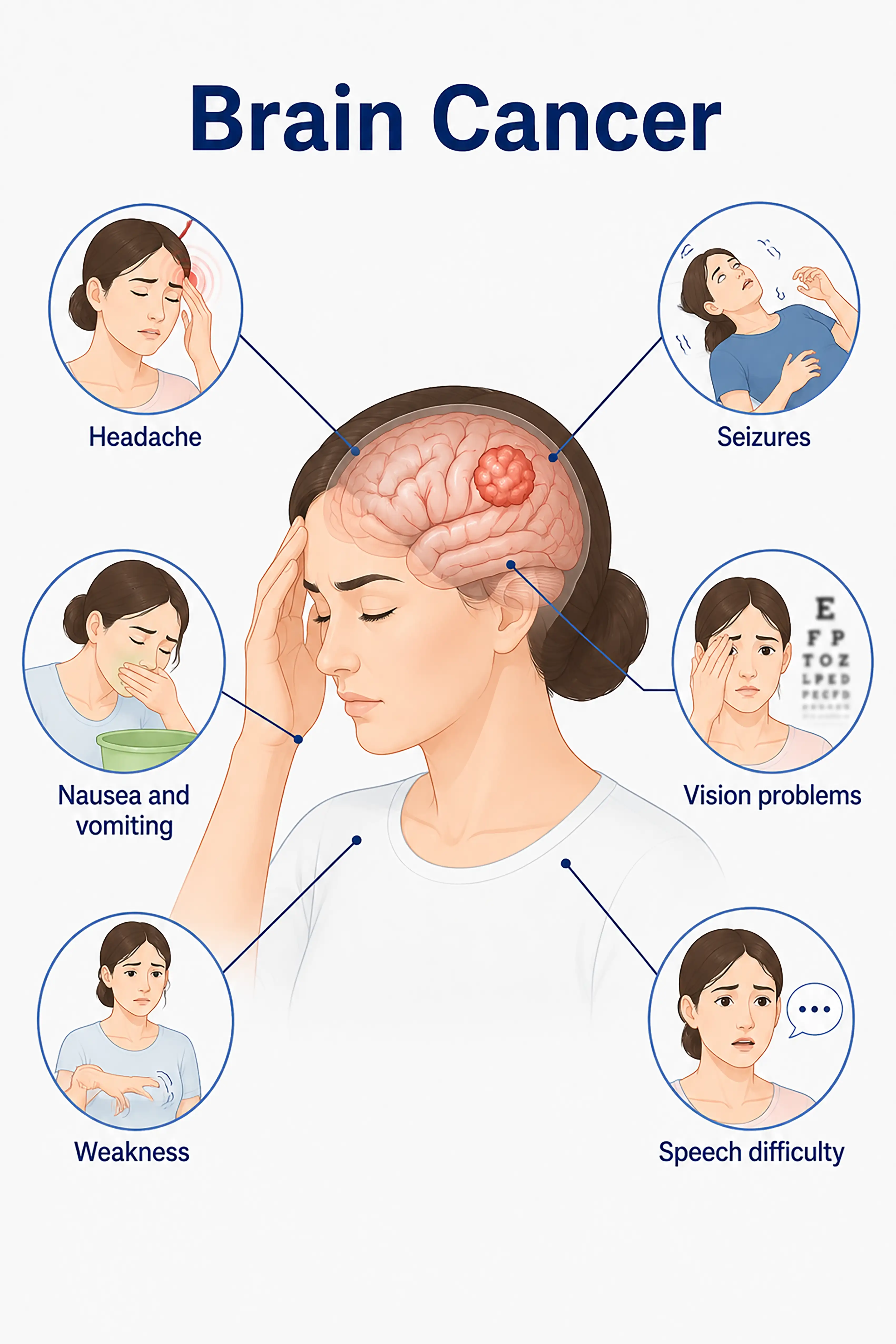
Brain cancer can affect people of all ages but is more common among the elderly and children.In the UK, over 12,000 people are diagnosed with primary brain tumors annually, with approximately half being malignant.Gliomas are the most common type of malignant brain tumor.Symptoms depend on the tumor's location in the brain; common symptoms include headaches, seizures, nausea and vomiting, changes in mental state or behavior, limb weakness, and vision or speech problems.
Symptoms associated with brain cancer stages
1.Early symptoms of brain cancer
When the tumor is small, there may be no obvious symptoms, or only mild headaches, memory loss, or occasional seizures, which are easily overlooked.Some patients remain asymptomatic for a long period.
2.Symptoms of mid-stage brain cancer
Increased intracranial pressure causes persistent headache and projectile vomiting, along with focal neurological deficits such as limb weakness, speech disorders, and visual changes; personality changes may also occur.
3.Symptoms of advanced brain cancer
Severe intracranial hypertension leads to impaired consciousness, coma, and brain herniation; extensive neurological damage results in paralysis, aphasia, and blindness, posing a threat to life.
When to Seek Medical Attention
Early signs of brain cancer include persistent headaches, nausea and vomiting, seizures, and limb weakness.Please consult a doctor via the "Chat with Doctor" feature for early detection.During the online consultation, the doctor will ask about your symptoms and the progression of the condition, and guide you through the process of undergoing cranial imaging.
Staging of brain cancer
Stage 0 brain cancer
This staging system is not applicable to brain cancer.Brain cancer is primarily graded using the WHO grading system (Grades I–IV), based on the degree of malignancy.
Stage I brain cancer
Low-grade tumors are characterized by slow growth, well-defined margins, and mild symptoms, generally resulting in a favorable surgical prognosis.
Stage II brain cancer
A low-grade malignant tumor characterized by infiltrative growth; it can present with seizures and focal neurological deficits.
Stage III brain cancer
Anaplastic tumors exhibit active cell proliferation and rapid symptom progression, accompanied by a marked increase in intracranial pressure.
Stage IV brain cancer
High-grade malignant tumors, such as glioblastoma, are characterized by rapid growth, severe symptoms, and a poor prognosis.
Detailed symptoms of brain cancer
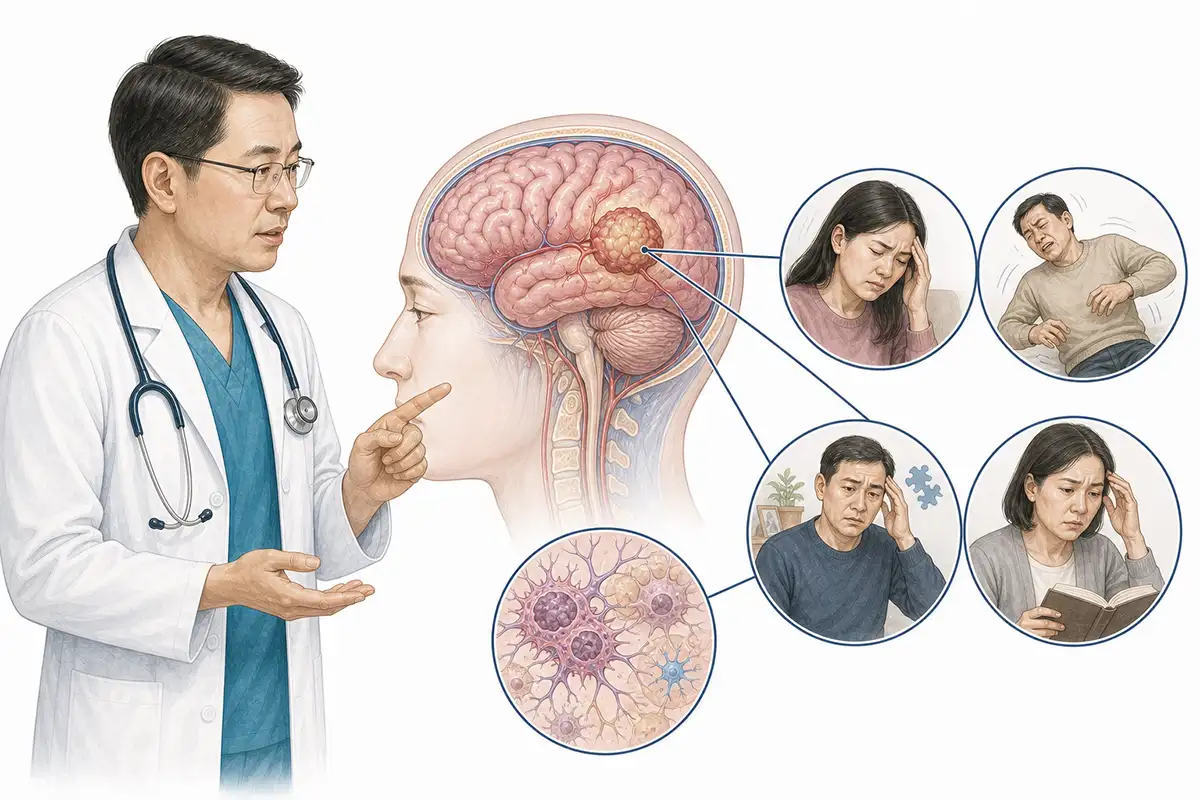
1.Onset of headache and vomiting
Increased intracranial pressure causes persistent headache that worsens in the morning and intensifies with coughing or exertion; it is accompanied by projectile vomiting, and the headache may temporarily subside after vomiting.
2.Epileptic seizures
Tumor irritation of surrounding brain tissue triggers focal or generalized epileptic seizures, which may be the initial symptom, manifesting as limb convulsions or loss of consciousness.
3.Limb weakness
Compression of the motor cortex and conduction tracts by the tumor leads to reduced muscle strength, numbness, or hemiplegia in the contralateral limbs, severely affecting the ability to perform daily activities.
4.Speech impairment
When the tumor affects speech centers, leading to difficulties in speech expression or comprehension, symptoms include word-finding difficulties, slurred speech, or an inability to understand others.
5.Visual changes
Tumor compression of the optic nerve or visual pathways leads to vision loss, visual field defects, or diplopia; severe cases can result in bilateral blindness.
6.Personality changes
Frontal lobe tumors can cause personality changes, emotional instability, impaired judgment, and abnormal social behavior; family members are often the first to notice.
7.Decline in memory and cognition
When the tumor affects frontal and temporal lobe function, it leads to memory decline, poor concentration, and cognitive impairment.
8.Presence of balance disorder
Cerebellar tumor causing balance disorders, ataxia, and an unsteady gait, affecting walking and daily activities.
9.Impaired consciousness
A rapid rise in intracranial pressure in the advanced stage leads to lethargy, confusion, or even coma, indicating the formation of cerebral herniation and requiring urgent management.
Conclusion
Symptoms of brain cancer vary depending on the tumor's location, making early diagnosis difficult.Seek medical attention promptly if you experience unexplained headaches accompanied by vomiting or new-onset seizures;cranial MRI is the primary diagnostic tool.


