


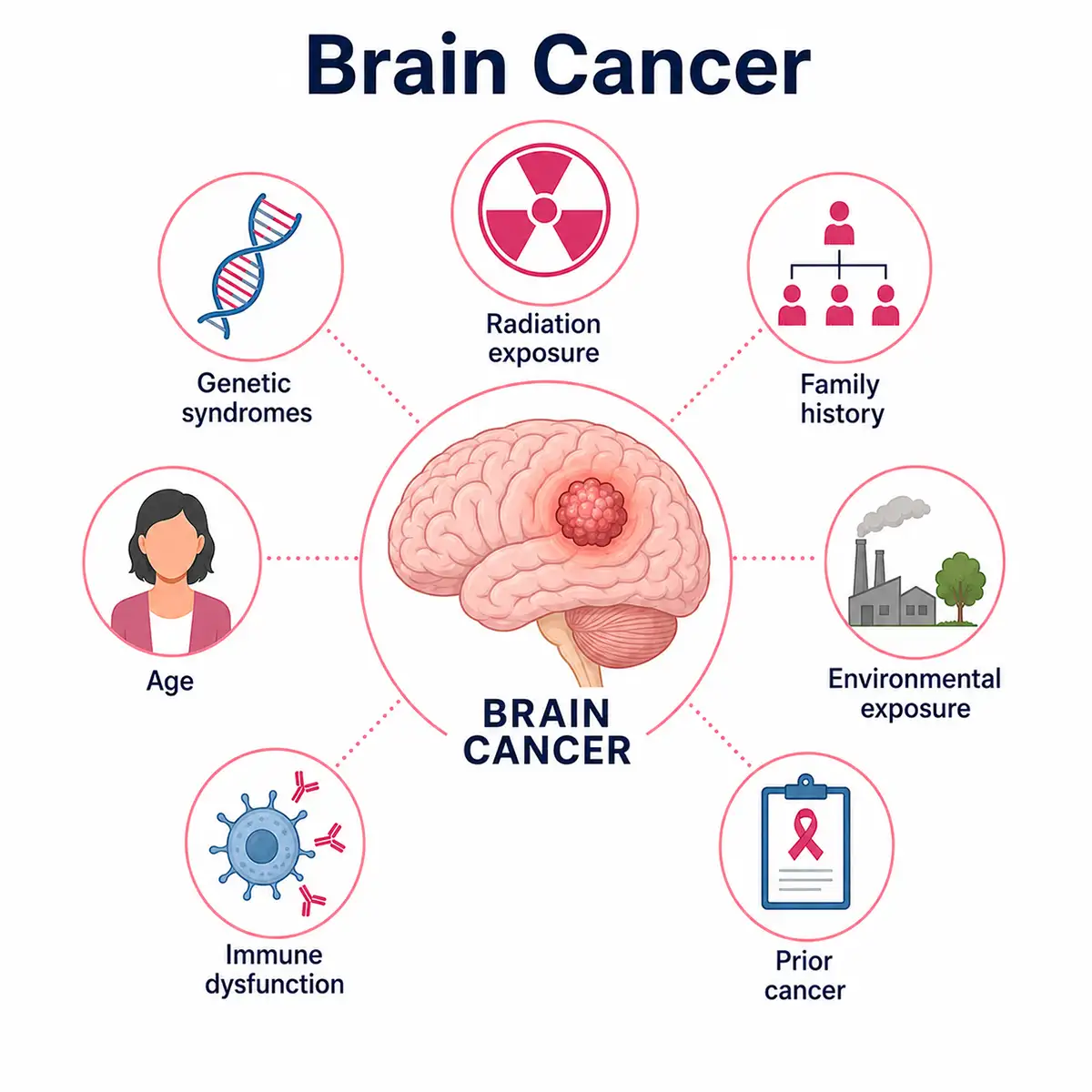
1. Ionizing radiation
High-dose ionizing radiation is the only established environmental risk factor for brain cancer; the risk of developing the disease is significantly increased among atomic bomb survivors and individuals who have undergone radiotherapy.
2. Genetic factors
Hereditary disorders such as Li-Fraumeni syndrome, neurofibromatosis, and tuberous sclerosis significantly increase the risk of developing cerebral glioma.
3. Nitroso compounds
Nitroso compounds in pickled foods and processed meats can be converted into potent carcinogens within the body; long-term intake increases the risk of brain cancer.
4. Viral infection
Viral infections, such as cytomegalovirus and JC polyomavirus, may play a role in the development of gliomas, although a causal relationship has not been fully established.
5. Head trauma
Recurrent head trauma may be associated with the development of meningiomas, although the causal relationship between trauma and gliomas remains controversial.
6. Electromagnetic field exposure
The relationship between long-term, high-dose exposure to radiofrequency electromagnetic fields (such as from mobile phones) and brain cancer remains controversial; the WHO classifies them as possible carcinogens.
7. Age and gender
Glioblastoma is most common in individuals aged 45 to 65; the incidence is slightly higher in men than in women, and the risk increases with age.
Conclusion
Brain cancer is caused by the combined effects of various factors, such as ionizing radiation and genetic mutations;it is the most common primary intracranial malignant tumor and poses a severe health threat.Avoiding radiation exposure, reducing the intake of cured foods, and undergoing regular check-ups for early detection and timely intervention are crucial.


