


1. Vascular malformation
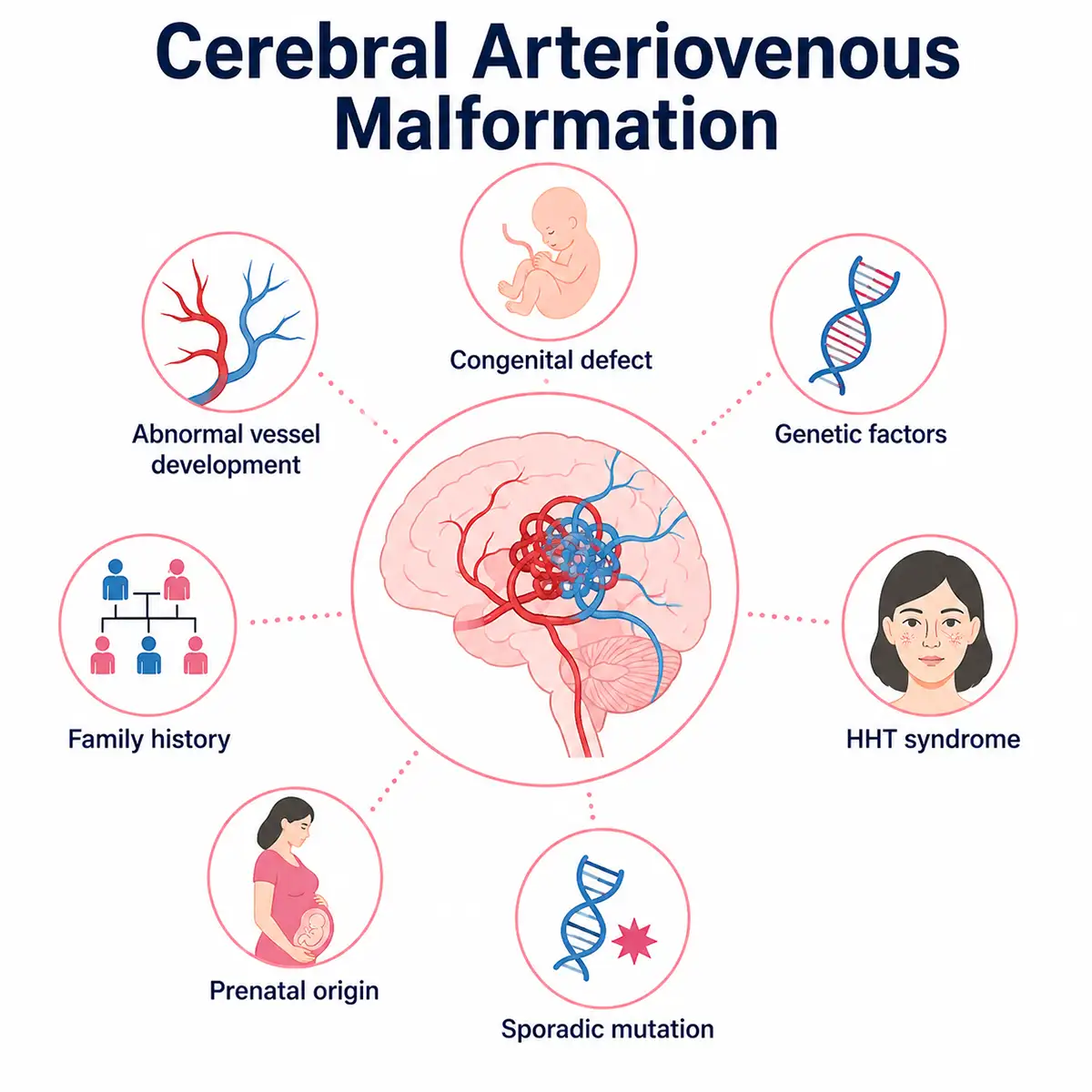
A failure in the formation of the capillary network between arteries and veins during embryonic cerebral vascular development causes arterial blood to flow directly into veins, creating a malformed vascular nidus.
2. RASA1 mutation
Capillary malformation-arteriovenous malformation syndrome is caused by a mutation in the *RASA1* gene and follows an autosomal dominant inheritance pattern; multiple vascular nevi may appear on the skin.
3. PTEN mutation
PTEN gene mutations are associated with developmental venous anomalies and arteriovenous malformations; patients with Cowden syndrome are at increased risk.
4. ENG and ACVRL1
Mutations in the *ACVRL1* gene can lead to hereditary hemorrhagic telangiectasia and an increased incidence of cerebral arteriovenous malformations.
5. Gene mutation
Somatic mutations in genes such as KRAS and BRAF are implicated in the pathogenesis of sporadic cerebral arteriovenous malformations, leading to abnormal proliferation of vascular endothelial cells.
6. Hemorrhage triggers
Hypertension and anticoagulant medications can increase the risk of rupture and hemorrhage in cerebral arteriovenous malformations, though they are not the underlying cause of the malformation's formation.
7. Age distribution
Symptoms of cerebral arteriovenous malformations (AVMs) typically appear between the ages of 10 and 40;approximately half of patients experience their first onset—often involving hemorrhage or seizures—before the age of 30.
Conclusion
Cerebral arteriovenous malformation (AVM) is caused by a combination of factors, including abnormal vascular development and genetic mutations;rupture and hemorrhage can be life-threatening and extremely dangerous.For individuals with a family history, undergoing cerebrovascular screening is crucial for early detection and timely intervention.


