


Anal cancer is a relatively rare tumor arising from the malignant transformation of epithelial cells in the anal canal and perianal skin/mucosa.Most cases are associated with HPV infection; common symptoms include rectal bleeding, anal pain, and changes in bowel habits.
Global incidence of anal cancer
Anal cancer is a rare malignancy of the digestive tract, accounting for approximately 2%–3% of cases.It is slightly more common in women than in men.HPV-16 infection is the primary risk factor; approximately 90% of anal cancer cases are associated with HPV infection.Anal intercourse, immunosuppression (such as HIV infection), and smoking are also risk factors.The incidence has been increasing in recent years.
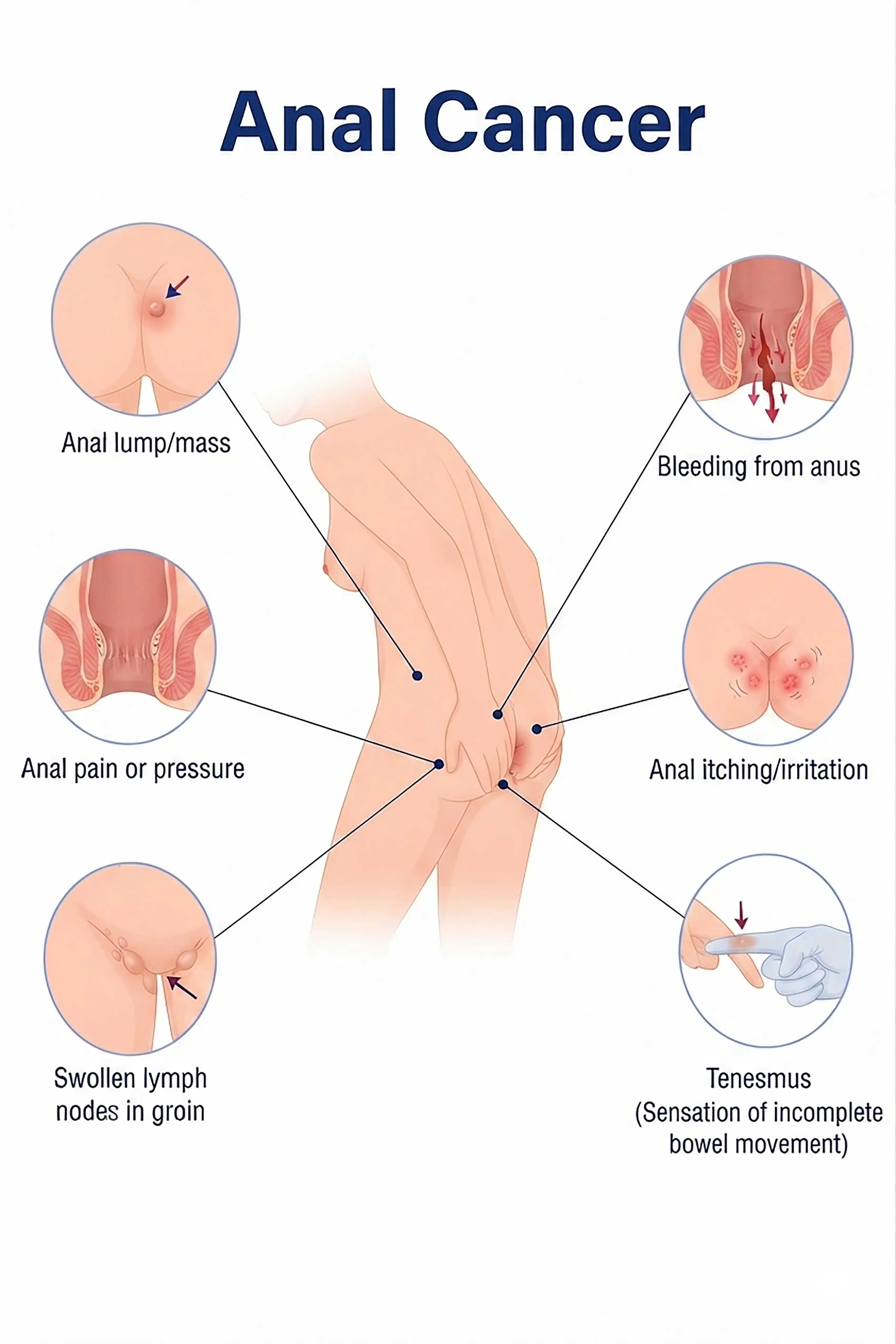
Symptoms associated with anal cancer stages
1.Early symptoms of anal cancer
The tumor is confined to the anal canal; symptoms are mild and atypical—such as slight anal discomfort, itching, or minor rectal bleeding—and are easily mistaken for hemorrhoids.
2.Symptoms of mid-stage anal cancer
Symptoms include increased bloody stools, persistent anal pain that worsens during defecation, the presence of an anal mass or sensation of a foreign body, changes in bowel habits, and tenesmus (a persistent urge to defecate).
3.Symptoms of advanced anal cancer
Tumor invasion of surrounding tissues results in severe pain, fecal incontinence, vaginal or urethral fistulas, inguinal lymphadenopathy, and symptoms of distant metastasis.
When to Seek Medical Attention
Early signs of anal cancer include anal bleeding, anal pain, anal lumps, and changes in bowel habits.Please consult a doctor via "Chat with a Doctor" for early detection.During the online consultation, the doctor will ask about your symptoms and history of HPV infection, and guide you through a digital anal examination and biopsy.
Staging of anal cancer
Stage 0 anal cancer
Cancer cells are confined to the anal epithelium; this is classified as carcinoma in situ. It typically presents with anal itching and mild discomfort.
Stage I anal cancer
Tumor diameter <2 cm, confined to the anus, no lymph node metastasis; may present with bloody stools and anal pain.
Stage II anal cancer
The tumor measures greater than 2 cm in diameter or invades adjacent tissues but remains confined to the perianal region; symptoms worsen significantly.
Stage III anal cancer
Tumor invasion of surrounding organs or metastasis to inguinal lymph nodes results in difficulty defecating and severe pain.
Stage IV anal cancer
Distant metastasis to the liver, lungs, and bones occurs, leading to persistent severe pain and systemic wasting.
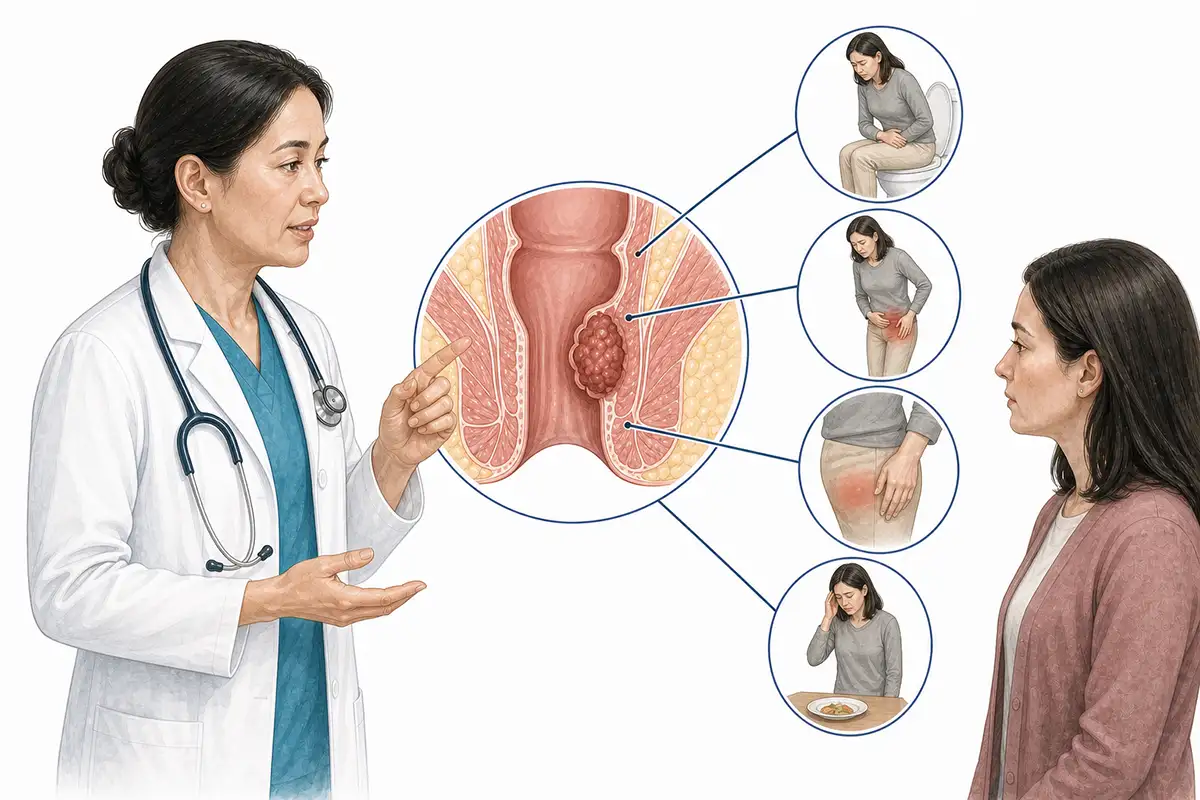
Detailed Symptoms of Anal Cancer
1.Anal bleeding
The most common initial symptom presents as dripping blood during defecation or blood on the surface of the stool; the blood is bright red, and while easily confused with hemorrhoids, the condition persists.
2.Anal pain
Tumor invasion of the anal sphincter or surrounding nerves causes persistent anal pain that worsens during defecation; in severe cases, it can affect sitting and lying down.
3.Anal mass
A hard mass appears at the anal verge or within the anal canal; it may be cauliflower-like or ulcerative, with an irregular surface that bleeds easily upon contact.
4.Change in bowel habits
Increased or decreased bowel movement frequency, marked tenesmus, narrowing of the stool caliber, and an intensifying sensation of incomplete evacuation.
5.Anal pruritus
Tumor irritation or secretions cause persistent perianal itching that worsens after scratching and is accompanied by a sensation of dampness.
6.Increased secretions
Tumor necrosis complicated by infection leads to increased anal discharge that is purulent or bloody and has a foul odor.
7.Inguinal lymphadenopathy
Anal cancer tends to metastasize to the inguinal lymph nodes, presenting as a hard, painless, and progressively enlarging inguinal mass.
8.Presence of difficulty defecating
The tumor occupies space in the anal canal, causing difficulty in defecation and narrowing of the stool caliber; severe cases may present with fecal incontinence or intestinal obstruction.
9.Weight loss
Due to reduced food intake and tumor-induced wasting, patients in the advanced stage experience weight loss over a short period, accompanied by fatigue and anemia.
Conclusion
Anal cancer is relatively rare but strongly associated with HPV infection.Seek medical attention promptly if persistent anal bleeding or pain occurs.HPV vaccination can effectively prevent anal cancer.Chemoradiotherapy is the primary treatment modality.


