


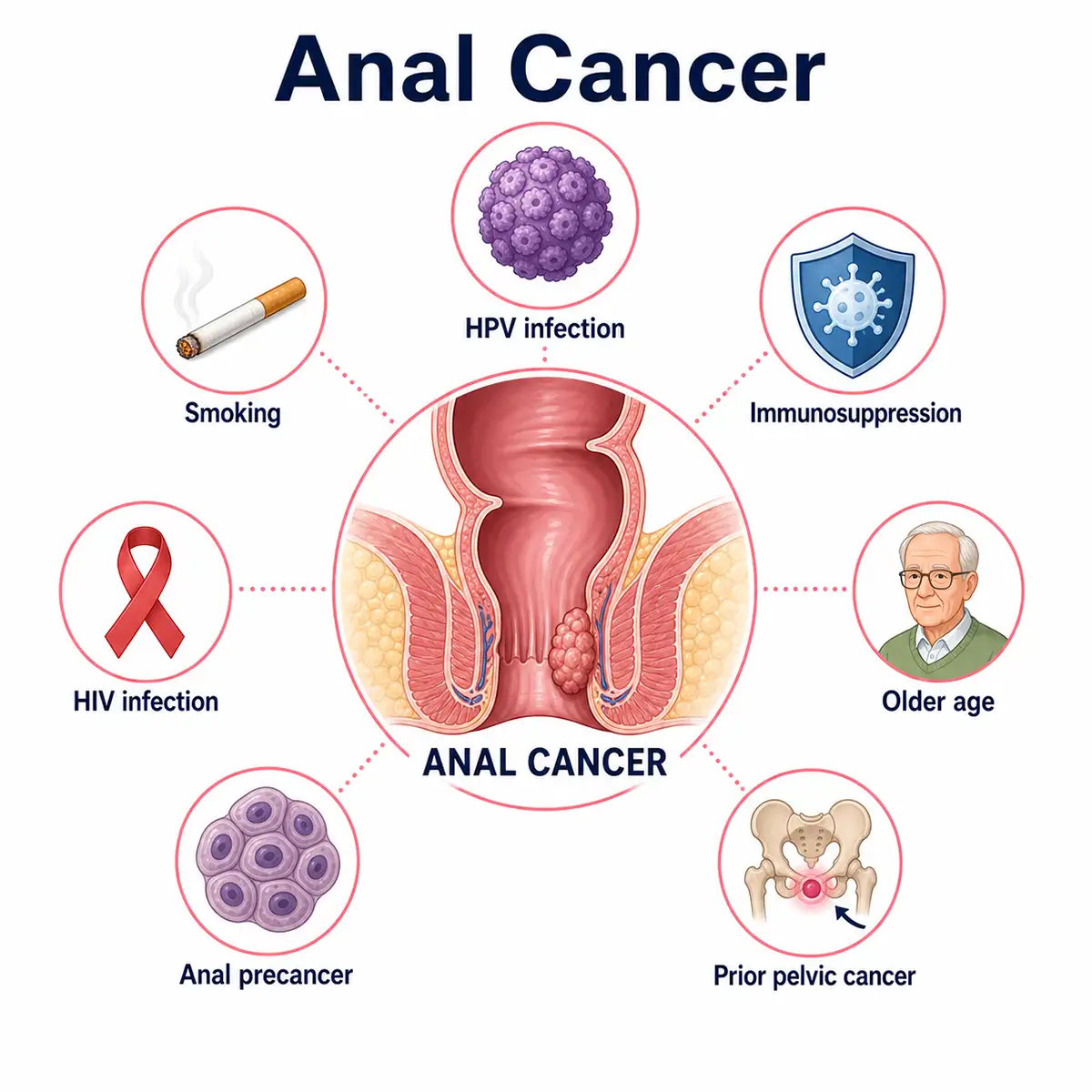
1. HPV infection
Persistent infection with high-risk human papillomavirus (HPV), particularly type 16, is a major causative factor for anal cancer, associated with approximately 90% of cases.
2. Immunosuppression
Individuals with HIV infection face a significantly increased risk of anal cancer; those using immunosuppressants following organ transplantation are also considered a high-risk group.
3. Smoking factor
Smoking increases the risk of developing anal cancer; carcinogens in tobacco can reach the anal canal mucosa via the bloodstream and promote carcinogenesis.
4. Sexual behavior factors
Anal intercourse, multiple sexual partners, and a history of sexually transmitted diseases increase the likelihood of HPV infection, thereby raising the risk of developing anal cancer.
5. Perianal lesions
Anal intraepithelial neoplasia is a definite precancerous lesion; chronic inflammation associated with long-standing anal fistulas and anal fissures can also increase the risk of malignant transformation.
6. Organ transplantation
Patients on long-term immunosuppressive therapy following solid organ transplantation have a 10- to 20-fold higher risk of developing anal cancer compared to the general population.
7. Age and gender
Anal cancer is most frequently seen in individuals aged 50 to 60. The incidence is slightly higher in women than in men, a difference that may be related to anatomical structures and hormonal factors.
Conclusion
Anal cancer is caused by a combination of factors, including HPV infection and immunosuppression; although rare, it poses serious health risks.Regular screening for high-risk groups—enabling early detection and timely intervention—is crucial for improving prognosis.


