


Anal cancer is a tumor formed by the malignant proliferation of squamous epithelial cells in the anal canal and perianal skin. The anal canal is approximately 3–4 cm long;it connects to the rectum above and terminates at the anal verge, marking the end of the digestive tract.
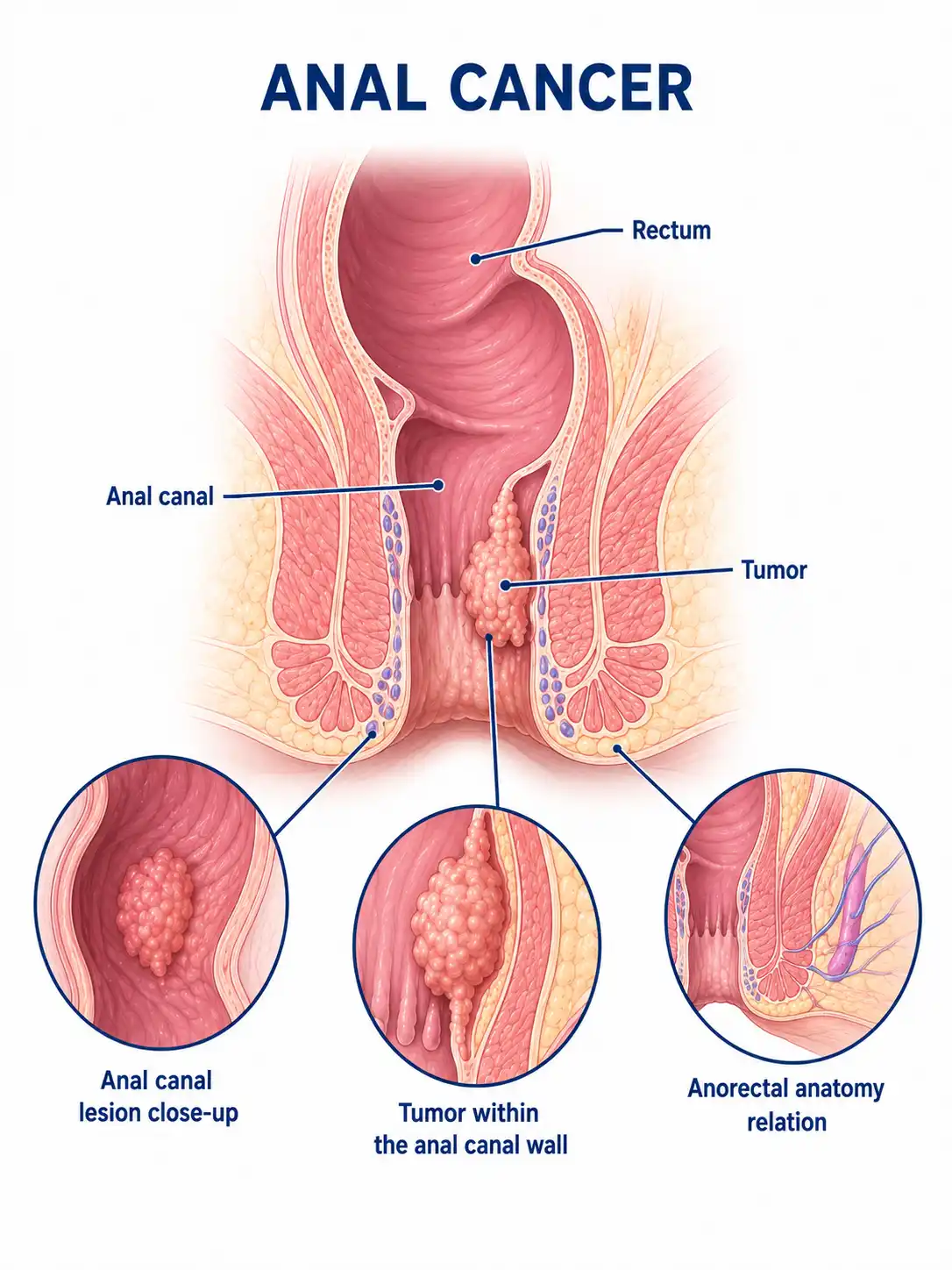
Global overview of anal cancer
Anal cancer is relatively uncommon among malignant tumors of the digestive tract, though its incidence has been rising in recent years, particularly in high-risk populations.The incidence is slightly higher in women than in men, and it most frequently affects individuals aged 50 to 60.
Consult a doctor regarding cancer-related issues
Individuals presenting with symptoms such as anal bleeding, anal pain, an anal mass, or changes in bowel habits—especially those with a history of HPV infection or an immunosuppressed state—should promptly consult a colorectal surgeon or oncologist.
Main types of anal cancer
1. Squamous cell carcinoma
It is the most common type of anal cancer, accounting for over 80% of cases; subtypes include large-cell keratinizing, large-cell non-keratinizing, and basaloid types.
2. Cloacogenic carcinoma
Also known as cloacogenic carcinoma; arises above the dentate line of the anal canal; exhibits unique biological behavior; relatively sensitive to radiotherapy and chemotherapy.
3. Adenocarcinoma types
Originates from anal canal glands or the mucosa of the distal rectum; relatively rare; treatment principles are similar to those for rectal cancer.
4. Melanoma
Malignant tumor originating from melanocytes in the anal canal; extremely rare, highly malignant, and associated with a very poor prognosis.
5. Neuroendocrine carcinoma
Extremely rare; it is a highly malignant tumor that grows rapidly and is prone to early metastasis.
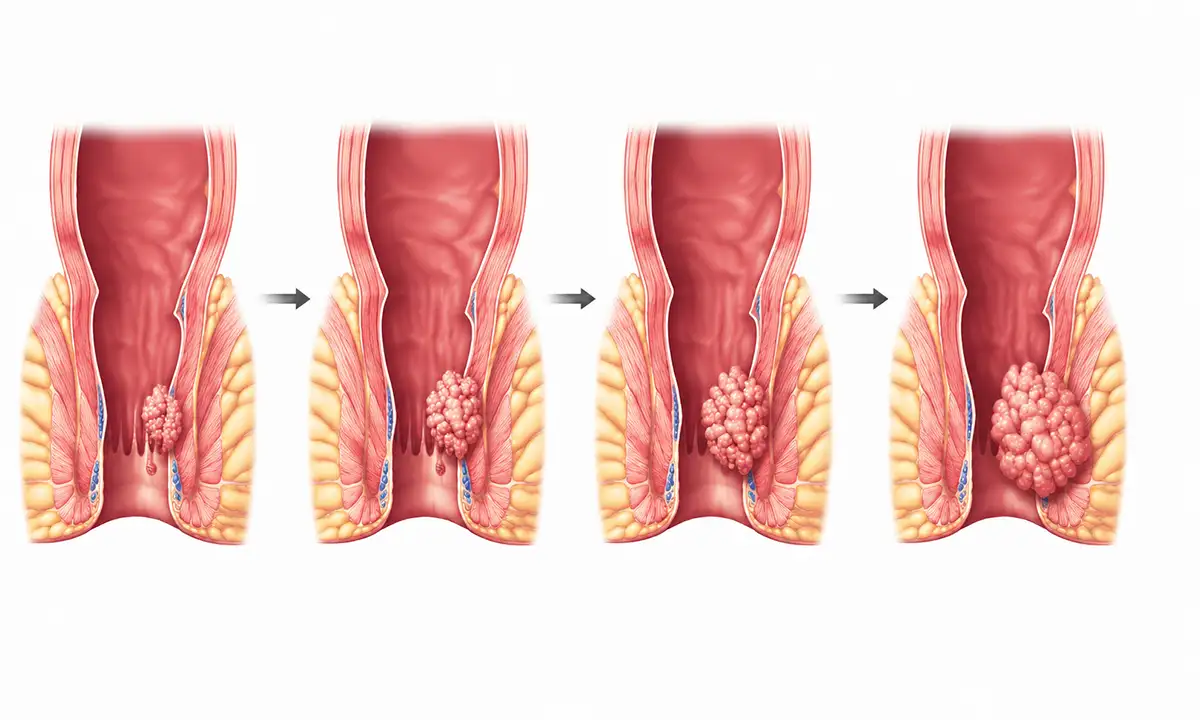
Typical symptoms and signs of anal cancer
1. Anal bleeding
The most common symptom is bright red anal bleeding during defecation; this is often mistaken for hemorrhoids, leading to delayed medical consultation.
2. Anal pain
Persistent anal pain or pain that intensifies during defecation occurs, associated with tumor invasion of the anal sphincter and surrounding nerves.
3. Anal mass
A hard, irregular mass is palpable in the perianal region or anal canal, potentially accompanied by ulceration and discharge.
4. Change in bowel habits
Symptoms include increased frequency of bowel movements, tenesmus (a feeling of incomplete defecation), or narrowing of the stool.
5. Anal pruritus
Persistent anal itching accompanied by increased discharge is associated with tumor irritation and local inflammation.
6. Enlarged inguinal lymph nodes
Enlarged, hard inguinal lymph nodes suggest possible lymph node metastasis.
Diagnostic methods for anal cancer
1. Digital rectal examination
Digital rectal examination (DRE) is the simplest and most direct diagnostic method; it allows for the palpation of masses within the anal canal and the assessment of tumor location, size, and mobility.
2. Anoscopy
Anoscopy allows for direct visualization of lesions in the anal canal and at the anal margin, guides biopsy sampling, and serves as a crucial diagnostic tool.
3. Pathological biopsy
Pathological examination of tissue from the suspected lesion is the gold standard for diagnosing anal cancer;the pathological type must be determined.
4. Pelvic MRI
Pelvic MRI can assess the depth of tumor invasion, the relationship with the sphincter complex, and the status of inguinal lymph node metastasis.
5. HPV testing
Detects high-risk HPV infection status; anal squamous cell carcinoma is frequently closely associated with HPV-16 infection.
6. Chest CT scan
Chest CT is used to rule out pulmonary metastasis and is an essential component of routine preoperative staging examinations.
Anal Cancer Treatment Methods
1. Concurrent chemoradiotherapy
Concurrent chemoradiotherapy using 5-FU combined with mitomycin or cisplatin is the standard treatment for anal cancer and allows for the preservation of anal function.
2. Abdominoperineal resection
For patients who experience treatment failure or recurrence following chemoradiotherapy, abdominoperineal resection and permanent colostomy are required.
3. Local resection
For small, early-stage tumors confined to the anal margin, wide local excision may be performed to preserve anal function.
4. Chemotherapy
Chemotherapy regimens combining 5-FU with cisplatin or carboplatin may be used for the systemic treatment of patients with advanced or recurrent disease.
5. Immunotherapy
PD-1 inhibitors are used to treat advanced or recurrent/metastatic anal cancer, offering a new option for some patients.
6. Targeted therapy
The use of drugs targeting specific molecular markers for anal cancer is currently being explored.
7. Palliative support
For patients with advanced disease, provide comprehensive treatment aimed at controlling pain, bleeding, and obstructive symptoms.
8. Follow-up monitoring
Regular post-treatment digital rectal examinations and pelvic imaging are required to monitor for local recurrence and lymph node metastasis; long-term follow-up is crucial.
Conclusion
Anal cancer is a malignant tumor closely associated with HPV infection, and concurrent chemoradiotherapy is the primary treatment modality.Early detection, standardized treatment, and long-term follow-up help improve patient prognosis.


