


Adrenocortical carcinoma is a rare tumor arising from the malignant transformation of adrenal cells.It is classified into functional (hormone-secreting) and non-functional types.Functional tumors can cause endocrine abnormalities such as Cushing's syndrome, virilization, or feminization.
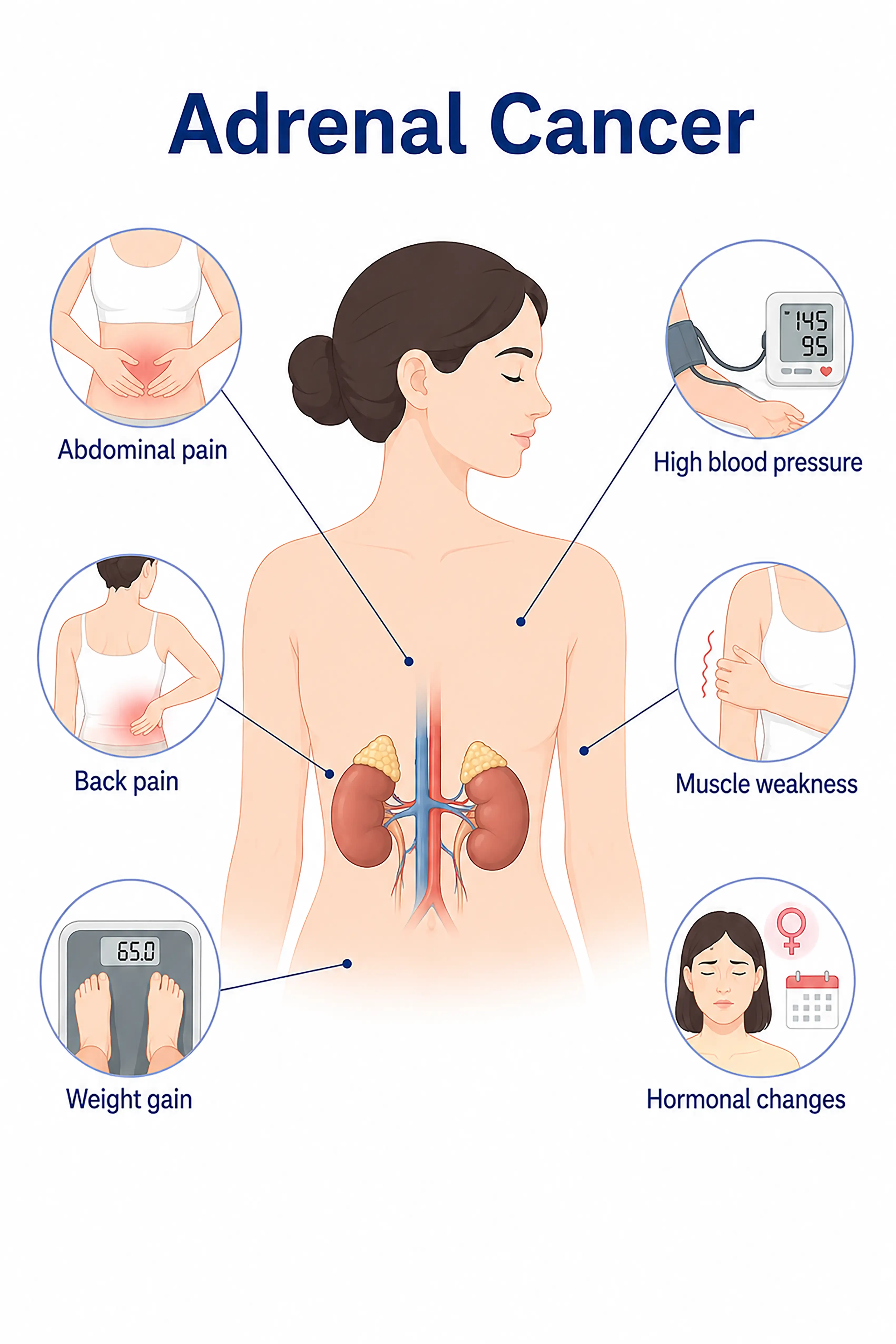
Global incidence of adrenocortical carcinoma
Adrenocortical carcinoma is a rare malignant tumor with an annual incidence of approximately one in a million.It can occur at any age, with two peak incidence periods: children under 5 and adults aged 40–50.Functional tumors account for about 60% of cases, most commonly secreting cortisol and causing Cushing's syndrome.Symptoms typically appear only when the tumor is large (often exceeding 6 cm in diameter), making early diagnosis difficult.
Symptoms of adrenocortical carcinoma by stage
1.Early symptoms of adrenal cancer
Functional tumors may present with hormone-related symptoms such as weight gain, elevated blood pressure, and menstrual irregularities.Non-functional tumors are often asymptomatic in the early stages and are frequently discovered incidentally during routine medical check-ups.
2.Symptoms of mid-stage adrenal cancer
Presentation includes abdominal or back pain, a palpable abdominal mass, and pronounced symptoms of abnormal hormone secretion (Cushingoid features such as moon face, buffalo hump, and purple striae).
3.Symptoms of advanced adrenal cancer
Massive tumor compressing surrounding organs, causing severe abdominal pain, distension, nausea, vomiting, and lower-extremity edema; distant metastasis leads to associated symptoms.
When to Seek Medical Attention
Early signs of adrenocortical carcinoma include an abdominal mass, unexplained weight changes, abnormally high blood pressure, and purple skin striae.Please consult a doctor via the "Chat with a Doctor" feature to facilitate early detection.During the online consultation, the doctor will ask about your symptoms and hormonal changes, and guide you through adrenal CT scans and hormone level tests.
Staging of adrenocortical carcinoma
Stage 0 adrenocortical carcinoma
Cancer cells are confined to the adrenal gland; the tumor is small. It is often asymptomatic or presents only with mild signs of hormonal abnormality.
Stage I adrenocortical carcinoma
Tumor diameter <5 cm, confined to the adrenal gland, no lymph node metastasis; may present with hormone-related symptoms.
Stage II adrenocortical carcinoma
Tumor diameter >5 cm, still confined to the adrenal gland; presents with abdominal discomfort and significant hormonal abnormalities.
Stage III adrenocortical carcinoma
Tumor invasion of surrounding tissues or regional lymph node metastasis results in abdominal pain and a palpable mass.
Stage IV adrenocortical carcinoma
Distant metastasis to the lungs, liver, and bones occurs, leading to systemic wasting and functional impairment of the affected organs.
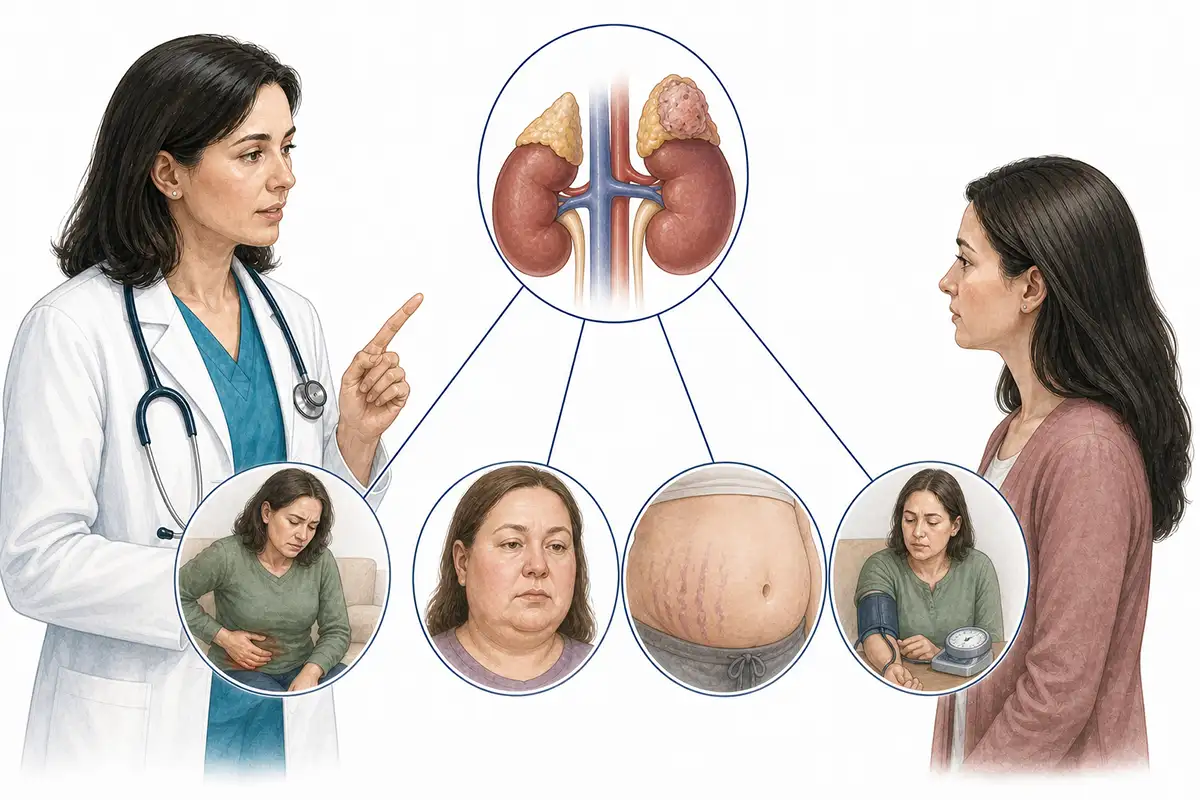
Detailed Symptoms of Adrenocortical Carcinoma
1.Abdominal mass
The most common sign of non-functional tumors is a palpable, firm abdominal mass with a smooth surface; it is located deep within the abdomen and moves with respiration.
2.Onset of abdominal and back pain
Tumor enlargement compressing surrounding tissues causes persistent abdominal or lumbar/back pain, which may radiate to the shoulder.
3.Moon face and buffalo hump
Excessive cortisol secretion leads to Cushing's syndrome, characterized by moon face, buffalo hump, centripetal obesity, and skin thinning.
4.Purple skin striae
Characteristic manifestations of Cushing's syndrome include pink or purple striae on the abdomen and thighs, as well as skin thinning and a tendency to bruise easily.
5.High blood pressure and blood glucose
Increased secretion of cortisol and aldosterone leads to hypertension and hyperglycemia that are poorly controlled by medication.
6.Muscle weakness
Excess cortisol causes muscle protein breakdown, resulting in proximal muscle weakness in the limbs and difficulty climbing stairs or rising from a squatting position.
7.Altered sex hormone levels
Hormone-secreting tumors can cause gynecomastia (breast enlargement) and testicular atrophy in men, or hirsutism (excessive body hair), deepening of the voice, and menstrual irregularities in women.
8.Weight change
Patients with Cushing's syndrome experience weight gain, whereas patients with advanced non-functional tumors experience weight loss due to wasting.
9.Edema and fatigue
Hypokalemia and tumor-related wasting lead to lower-extremity edema, fatigue, and reduced exercise tolerance.
Conclusion
Adrenocortical carcinoma is rare, and early diagnosis is difficult.Surgery is the only potentially curative treatment.Hormone testing and imaging studies aid in the diagnosis of functional tumors.


