


Adrenocortical carcinoma is a tumor formed by the malignant proliferation of adrenocortical cells.The adrenal gland is located above the kidney and consists of two parts: the cortex and the medulla; the cortex secretes glucocorticoids, mineralocorticoids, and sex hormones.
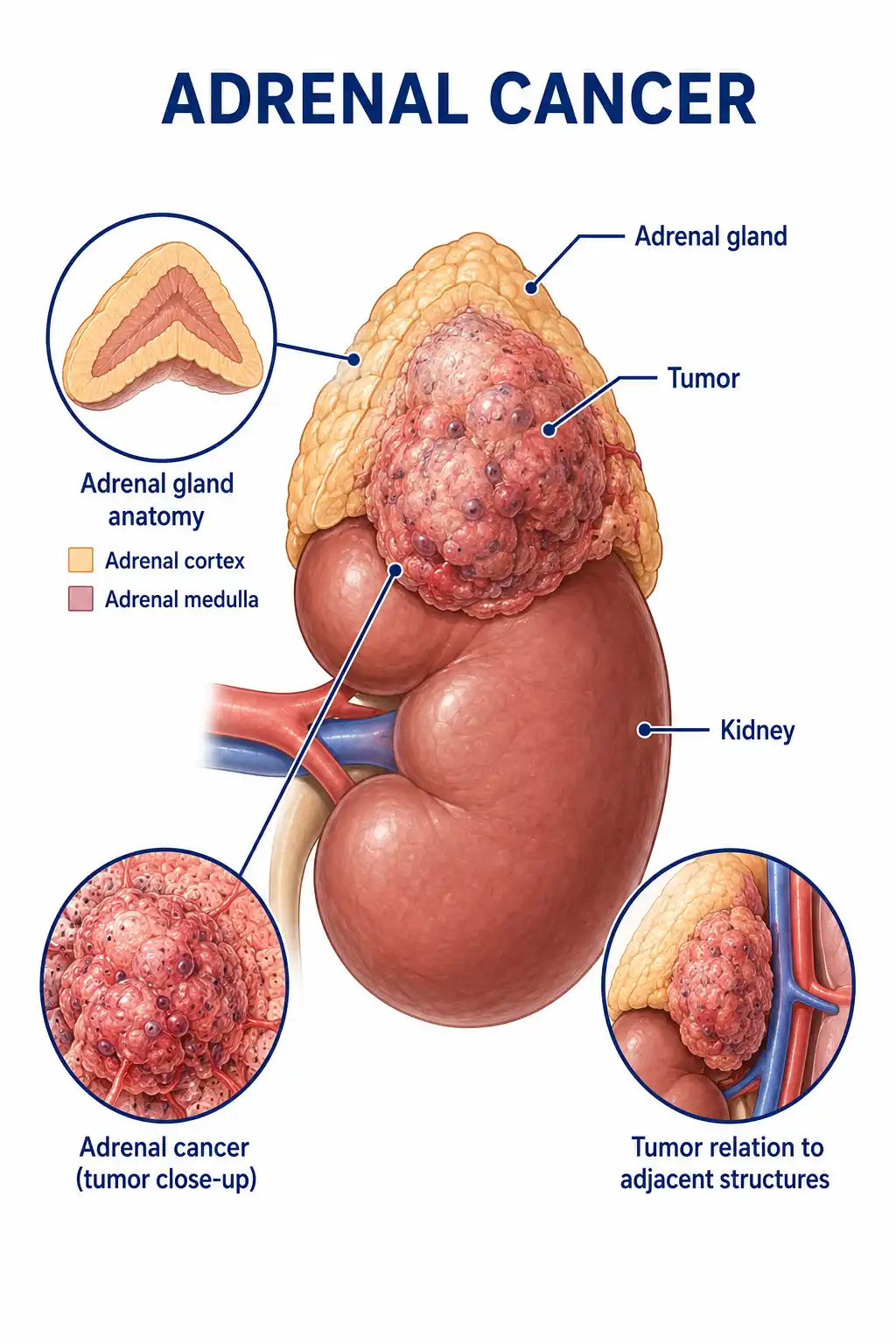
Global overview of adrenocortical carcinoma
Adrenocortical carcinoma is a very rare malignant tumor with an incidence of approximately 1–2 cases per million people annually.It can occur at any age, is slightly more common in women than in men, and approximately 60% of the tumors are functional.
Consult a doctor regarding cancer-related issues
Patients presenting with an abdominal mass, symptoms of abnormal hormone secretion, or an adrenal mass incidentally discovered on imaging should promptly consult an endocrinologist or urologist.
Main types of adrenocortical carcinoma
1.Functional adrenocortical carcinoma
Secretes excessive hormones, potentially causing symptoms such as Cushing's syndrome, primary aldosteronism, or masculinization in women.
2.Non-functional adrenocortical carcinoma
It does not secrete clinically significant hormones; it is often discovered incidentally during a physical examination or when the tumor enlarges and causes symptoms due to compression.
3.Mixed-type adrenocortical carcinoma
It secretes multiple hormones simultaneously, resulting in complex and diverse clinical manifestations.
4.Sarcomatoid carcinoma
Contains sarcomatous components; highly malignant with an extremely poor prognosis.
5.Eosinophilic carcinoma
The cytoplasm of the cancer cells is rich in eosinophilic granules;this is a relatively rare presentation.
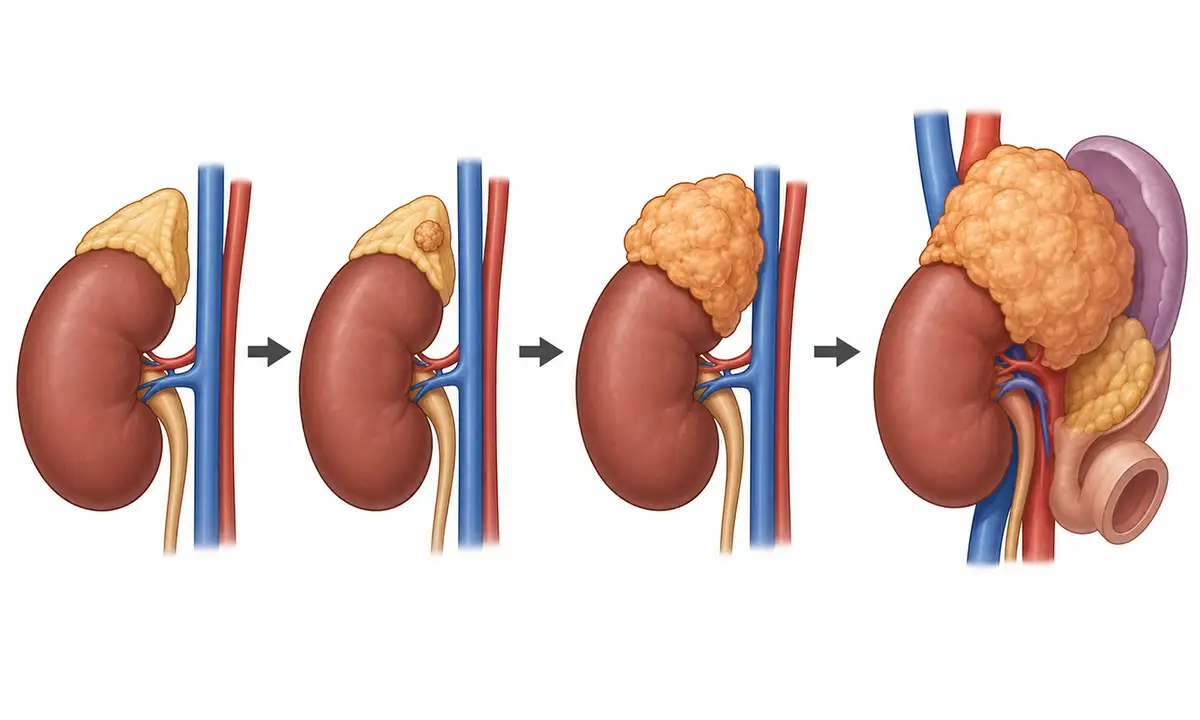
Typical symptoms and signs of adrenocortical carcinoma
1.Abdominal mass
A hard, fixed abdominal mass is palpable upon tumor enlargement, potentially causing abdominal distension and pain.
2.Cushing's syndrome
Excessive secretion of cortisol by the tumor leads to centripetal obesity, moon face, buffalo hump, purple skin striae, and hypertension.
3.Symptoms of masculinization
Female patients may exhibit signs of masculinization, such as menstrual irregularities, increased body hair, deepening of the voice, and breast atrophy.
4.Hypertension
Excessive secretion of aldosterone or cortisol by the tumor leads to persistent hypertension accompanied by hypokalemia.
5.Abdominal pain
Persistent dull abdominal pain occurs when the tumor enlarges, stretching the capsule or invading surrounding tissues.
6.Systemic symptoms
Patients in the advanced stage exhibit systemic symptoms such as weight loss, fatigue, and loss of appetite.
Diagnostic Methods for Adrenocortical Carcinoma
1.Hormone testing
Measurement of cortisol, aldosterone, sex hormone, and catecholamine levels in blood and urine to assess the functional status of the tumor.
2.Imaging examination
CT or MRI can demonstrate tumor size, morphology, and local invasion; typical findings include heterogeneous enhancement.
3.Biopsy pathology
Pathological examination of tissue obtained via needle biopsy is the gold standard for definitive diagnosis; however, the potential risk of tumor seeding associated with the procedure must be considered.
4.Functional tests
The dexamethasone suppression test and ACTH stimulation test help assess the functional status of the tumor.
5.Molecular testing
Detects *TP53* mutations, *IGF2* overexpression, and miRNA expression profiles, aiding in diagnosis and prognostic assessment.
6.Staging assessment
Chest CT and whole-body assessment are used to rule out distant metastasis and determine the clinical stage.
Treatment methods for adrenocortical carcinoma
1.Radical adrenalectomy
Complete resection of the tumor and surrounding invaded tissue is the primary treatment modality; achieving negative surgical margins is essential.
2.Mitotane therapy
Mitotane is a highly effective drug for adrenocortical carcinoma, used for postoperative adjuvant therapy and systemic treatment in patients with advanced disease.
3.Chemotherapy
The EDP-M regimen (etoposide, doxorubicin, and cisplatin combined with mitotane) is used for patients with advanced or recurrent disease.
4.Radiotherapy
Postoperative adjuvant radiotherapy can reduce local recurrence rates, while palliative radiotherapy can alleviate pain caused by bone metastases.
5.Targeted therapy
Drugs targeting IGF1R, mTOR, and other targets have demonstrated some efficacy in clinical trials.
6.Immunotherapy
Immune checkpoint inhibitors have demonstrated some efficacy in a subset of patients with adrenocortical carcinoma.
7.Hormone management
Hormone monitoring and dosage adjustment are crucial during postoperative hormone replacement therapy and mitotane treatment.
8.Follow-up monitoring
Postoperative follow-up involving regular imaging and hormone level monitoring is crucial for the early detection of recurrence.
Conclusion
Adrenocortical carcinoma is a rare, highly aggressive malignant tumor.Comprehensive treatment—combining radical surgery with mitotane and chemotherapy—helps improve patient prognosis.


