


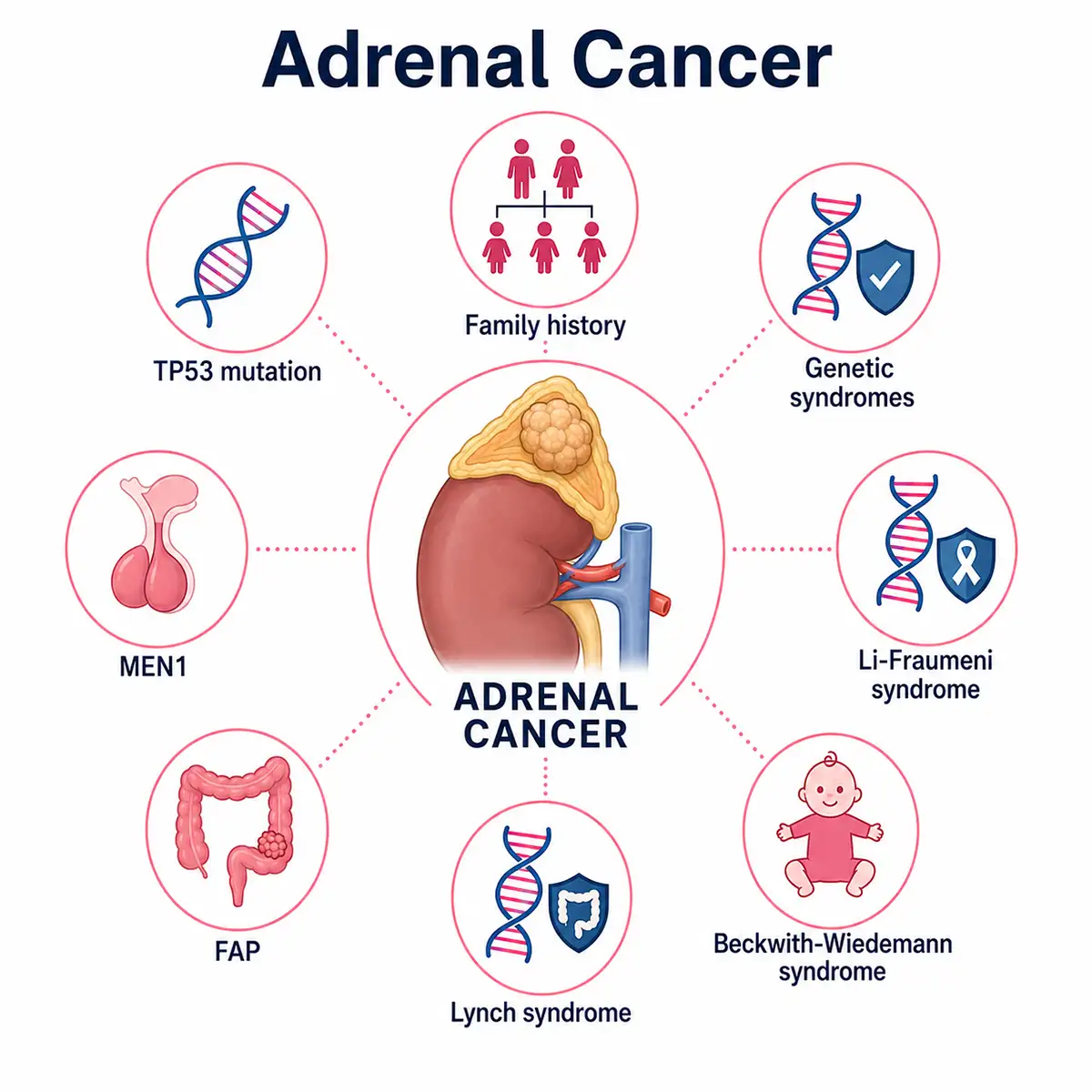
1. TP53 mutation
Mutations in the *TP53* tumor suppressor gene are closely associated with the development of adrenocortical carcinoma; patients with Li-Fraumeni syndrome face a significantly increased risk.
2. Lynch syndrome
Patients with Lynch syndrome (hereditary non-polyposis colorectal cancer) have an increased risk of developing adrenocortical carcinoma compared to the general population.
3. Beckwith-Wiedemann
Patients with Beckwith-Wiedemann syndrome have an increased risk of developing adrenocortical carcinoma during childhood; the condition is caused by an imprinting gene defect.
4. Multiple endocrine neoplasia
Patients with multiple endocrine neoplasia type 1 and Carney complex have an increased incidence of adrenocortical tumors.
5. Hormonal factors
Long-term use of adrenocorticotropic hormone (ACTH) or exposure to high levels of cortisol may increase the risk of developing adrenocortical carcinoma.
6. Age and gender
Adrenocortical carcinoma can occur at any age; cases in children are often hereditary, while the incidence rate in adult women is slightly higher than in men.
7. Radiation exposure
Children who undergo radiation therapy may face a slightly increased risk of developing adrenocortical carcinoma years later.
Conclusion
Adrenocortical carcinoma is caused by a combination of factors, including TP53 gene mutations and genetic syndromes; although rare, it is highly malignant and poses a serious health threat.Individuals with a family history should undergo genetic counseling and regular screening, as early detection and timely intervention are crucial.


