


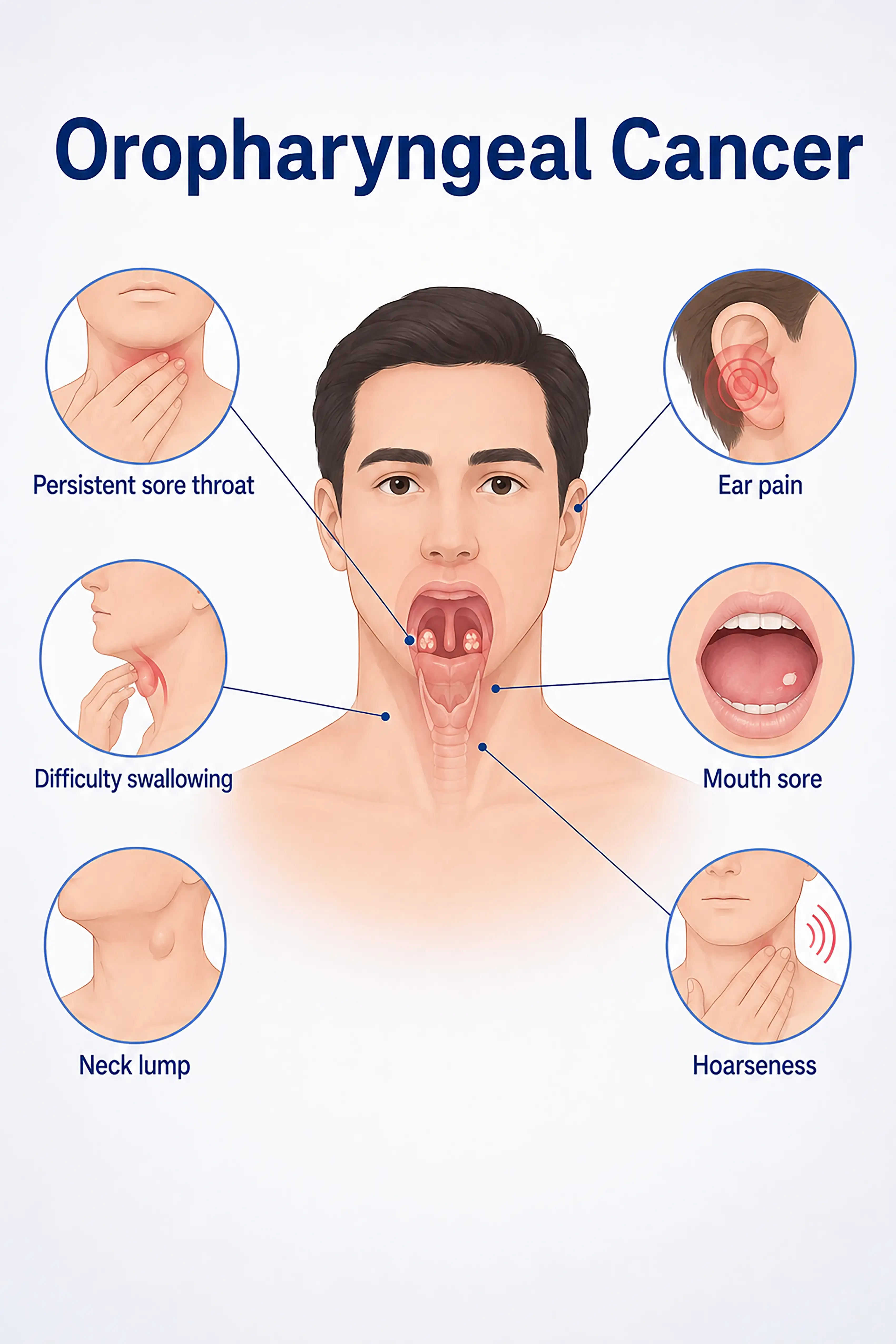
Oropharyngeal cancer arises from malignant transformation of oropharyngeal mucosal epithelial cells. Early symptoms are nonspecific, commonly including throat pain, difficulty swallowing, and referred ear pain.
Oropharyngeal cancer prevalence worldwide
Oropharyngeal cancer accounts for a proportion of head and neck malignancies worldwide. HPV-related incidence is rising in developed regions, and men are more commonly affected. HPV16 is the leading cause, and HPV-positive cases have a better prognosis than HPV-negative cases.
Oropharyngeal cancer symptoms by stage
1.Early-stage oropharyngeal cancer symptoms
The tumor is confined to the oropharynx, causing a unilateral foreign body sensation, mild throat pain, and swallowing discomfort resembling tonsillitis and easily overlooked.
2.Intermediate-stage oropharyngeal cancer symptoms
Throat pain worsens and radiates to the ear, swallowing difficulty becomes pronounced, and ipsilateral cervical lymph nodes enlarge. Bad breath and minor bleeding may occur.
3.Advanced-stage oropharyngeal cancer symptoms
Extensive invasion of surrounding tissues and distant metastasis cause severe pain, major bleeding, difficulty opening the mouth, extensive cervical lymph node metastasis, and distant organ damage.
When to Seek Medical Attention
Early signs of oropharyngeal cancer include persistent unilateral throat pain, difficulty swallowing, referred ear pain, and neck lumps. Consult a doctor through "Chat with a Doctor" for early detection. During an online consultation, the doctor will ask about your symptoms and HPV exposure history and guide you toward laryngoscopy and biopsy.
Oropharyngeal cancer stages
Stage 0 oropharyngeal cancer
Cancer cells are confined to the mucosal epithelium, representing carcinoma in situ, with white or red patches in the oropharynx and mild symptoms that are easily overlooked.
Stage I oropharyngeal cancer
The tumor is less than two centimeters in diameter, confined to one oropharyngeal subsite, without lymph node metastasis, and causes unilateral throat pain and a foreign body sensation.
Stage II oropharyngeal cancer
The tumor is two to four centimeters in diameter or invades adjacent structures, with no lymph node metastasis or a single ipsilateral metastatic node smaller than three centimeters.
Stage III oropharyngeal cancer
The tumor exceeds four centimeters or is accompanied by a single ipsilateral metastatic node larger than three centimeters. Swallowing difficulty is pronounced and neck lumps enlarge.
Stage IV oropharyngeal cancer
The tumor invades the skull base or cervical spine, or spreads to the lungs, bones, and liver, causing severe pain and systemic wasting symptoms.
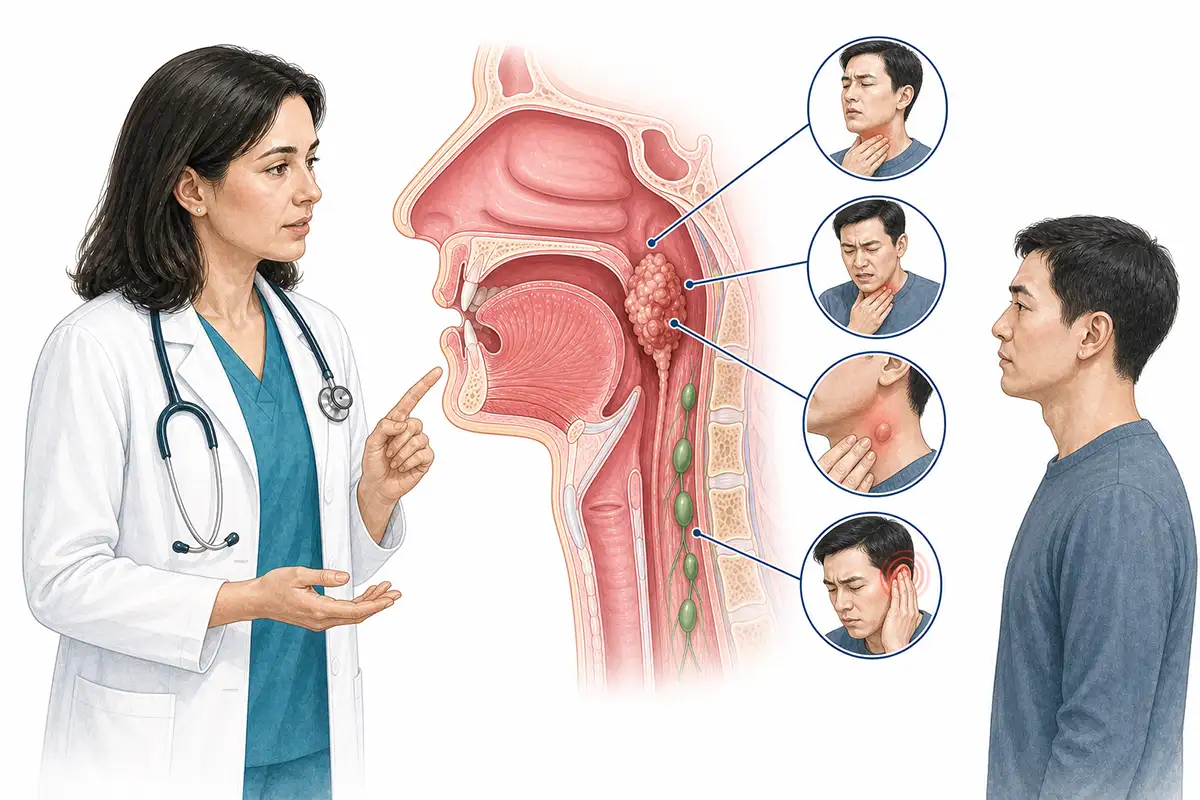
Oropharyngeal cancer symptoms in detail
1.Persistent unilateral throat pain
Persistent pain on one side of the throat progressively worsens, is pronounced on swallowing, and does not respond to antibiotics, suggesting a lesion of the lateral oropharyngeal wall.
2.Severe swallowing difficulty
Tumor enlargement obstructs the oropharynx or invades the tongue base, impairing swallowing and making solids difficult to swallow, with a foreign body sensation.
3.Referred ear pain
Glossopharyngeal nerve invasion causes deep ipsilateral referred ear pain despite a normal ear examination, helping localize the lesion.
4.Enlarged cervical lymph nodes
Oropharyngeal cancer can spread early to cervical lymph nodes, usually upper deep cervical jugulodigastric nodes, which become hard and progressively enlarge.
5.Bad breath and increased bleeding
Necrosis and infection of the tumor surface produce a foul odor. Contact or eating readily causes bleeding, seen as blood-stained sputum.
6.Markedly restricted mouth opening
Invasion of the medial pterygoid muscle or pterygomandibular space causes difficulty opening the mouth, complicating oral examination and treatment procedures.
7.Tongue base discomfort
Patients with tongue base cancer often feel a foreign body sensation, pain, and restricted movement at the tongue base, with increased discomfort during speech and swallowing.
8.Voice changes
Laryngeal invasion or recurrent laryngeal nerve compression causes hoarseness and impaired breathing, with severe cases developing respiratory difficulty.
9.Rapid weight loss
Difficulty swallowing reduces food intake while the tumor increases energy consumption, causing marked short-term weight loss, weakness, and malnutrition.
Conclusion
Prognosis in oropharyngeal cancer is closely associated with HPV status, tumor stage, and treatment. Early detection and individualized comprehensive treatment improve survival and preserve organ function.


