


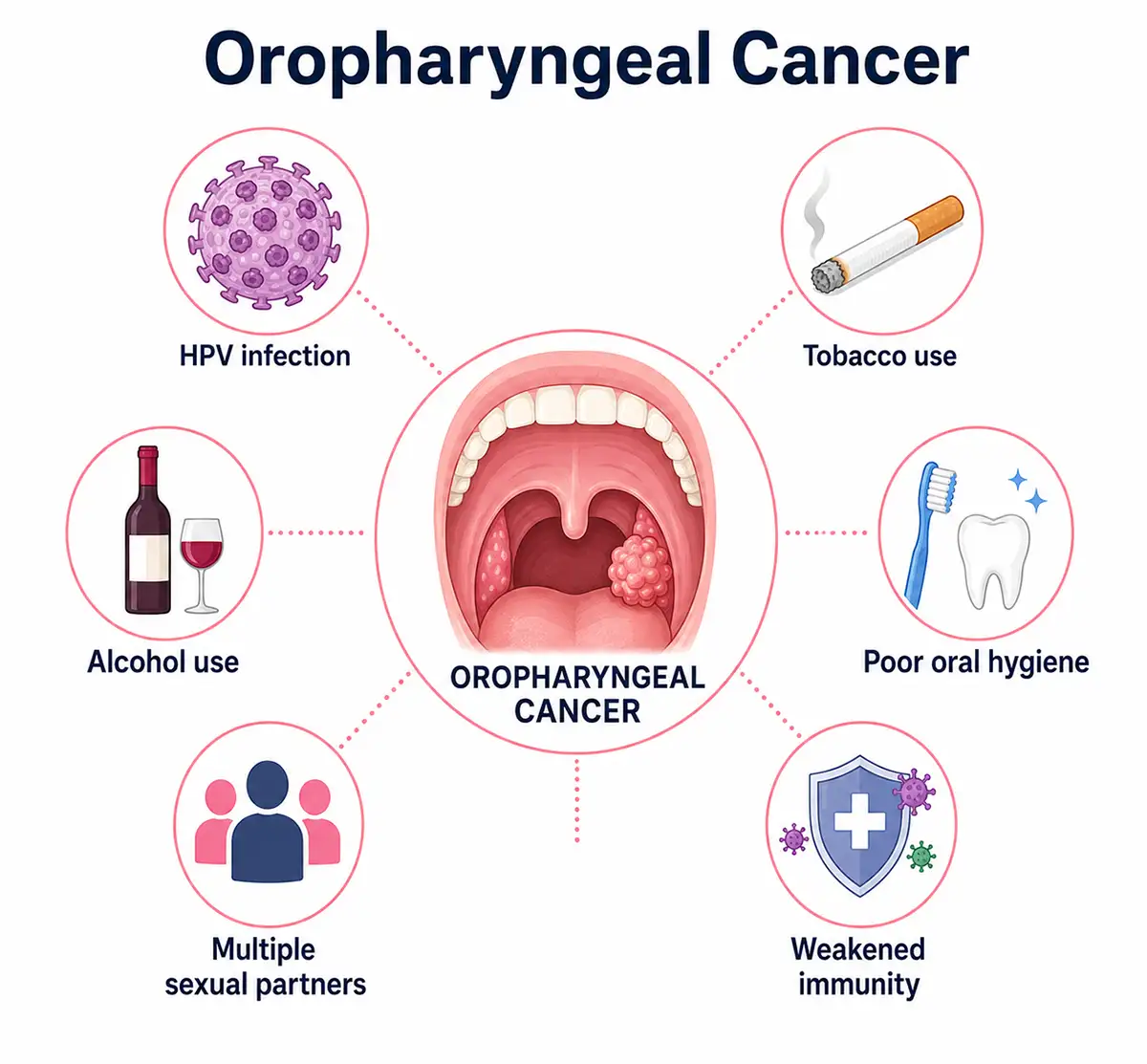
1. HPV infection
Persistent high-risk human papillomavirus infection, especially type 16, is an important cause. The virus spreads through sexual contact and integrates into the host genome, promoting malignant transformation.
2. Smoking
Substances described as carcinogens in tobacco, including nicotine and tar, directly irritate the oropharyngeal mucosa. Long-term smoking significantly increases oropharyngeal cancer risk.
3. Alcohol consumption factors
Long-term heavy drinking increases oropharyngeal cancer risk. Alcohol acts as a solvent promoting absorption of tobacco and other carcinogens and has a synergistic carcinogenic effect with smoking.
4. Sexual behavior factors
Multiple sexual partners and oral sex increase HPV infection risk. Sexual contact is the main route of oropharyngeal HPV transmission.
5. Immunosuppression
Immunocompromised people, such as those with HIV or organ transplant recipients, have reduced ability to clear HPV and increased oropharyngeal cancer risk.
6. Oral hygiene
Long-standing poor oral hygiene promotes bacterial and fungal growth. Carcinogens such as nitrosamines produced by these organisms increase malignant transformation risk in the oropharyngeal mucosa.
7. Genetic factors
Oropharyngeal cancer shows familial clustering. Having a first-degree relative with head and neck cancer increases disease risk by about 1.7-fold.
Conclusion
Oropharyngeal cancer results from the combined effects of HPV infection, smoking, drinking, and other factors and can seriously impair swallowing and breathing. Avoiding high-risk behavior, quitting smoking, limiting alcohol, and regular examinations for early detection and timely intervention are essential.


