


Oropharyngeal cancer is a tumor formed by malignant proliferation of the oropharyngeal mucosal epithelium. HPV-related cases have increased recently. Diagnosis relies on laryngoscopy, HPV testing, and pathological biopsy.
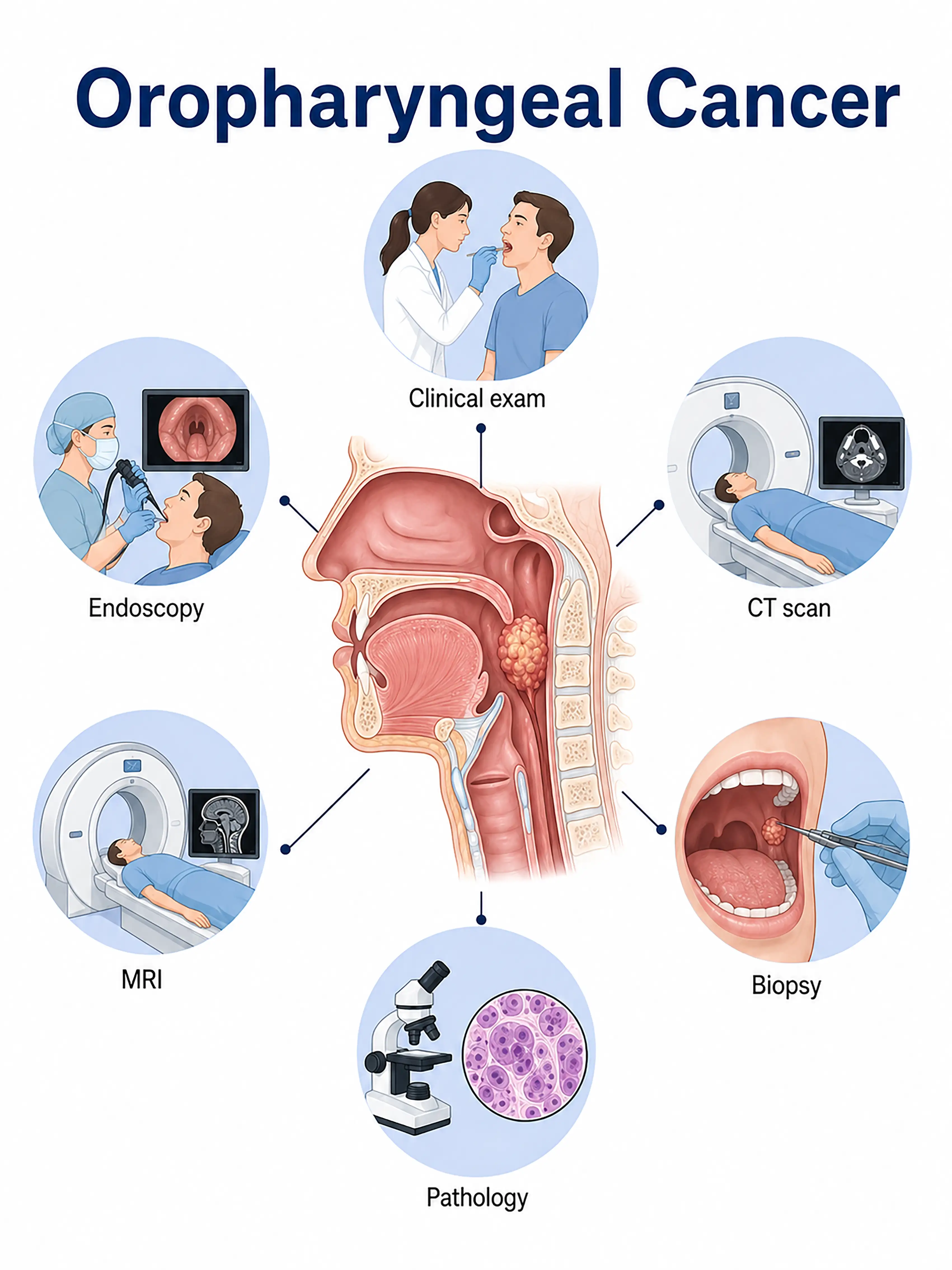
Oropharyngeal cancer accounts for a proportion of head and neck malignancies worldwide, with HPV-related incidence rising in developed regions. About 70%-80% of oropharyngeal squamous cell carcinomas are associated with HPV infection. HPV-positive cases have a better prognosis than HPV-negative cases. Tumor HPV status should be established in all newly diagnosed oropharyngeal squamous cell carcinomas.
Oropharyngeal cancer diagnosis by stage
1.Early-stage oropharyngeal cancer diagnosis
The tumor is confined to the oropharyngeal mucosa, causing a foreign body sensation or mild throat pain. Laryngoscopy shows raised mucosa or ulcers on the lateral oropharyngeal wall or tonsillar region, HPV testing is positive, and biopsy confirms the diagnosis.
2.Intermediate-stage oropharyngeal cancer diagnosis
The tumor enlarges and invades surrounding structures, with enlarged cervical lymph nodes. Contrast-enhanced CT or MRI assesses tumor extent and lymph node metastasis, while HPV testing by p16 immunohistochemistry or DNA/RNA testing determines viral status.
3.Advanced-stage oropharyngeal cancer diagnosis
The tumor extensively invades the skull base or cervical spine, or spreads to distant sites. Whole-body PET-CT assesses distant metastasis, and repeated biopsies establish pathological type and HPV status to guide comprehensive treatment.
Without timely diagnosis, oropharyngeal cancer invades deep tissues and spreads to cervical lymph nodes, increasing distant metastasis risk and affecting organ-preserving treatment outcomes and survival.
When to Seek Medical Attention
Early signs of oropharyngeal cancer include persistent unilateral throat pain, difficulty swallowing, referred ear pain, and neck lumps. Consult a doctor through "Chat with a Doctor" for early detection. During an online consultation, the doctor will ask about your symptoms and HPV exposure history and guide you toward laryngoscopy and biopsy.
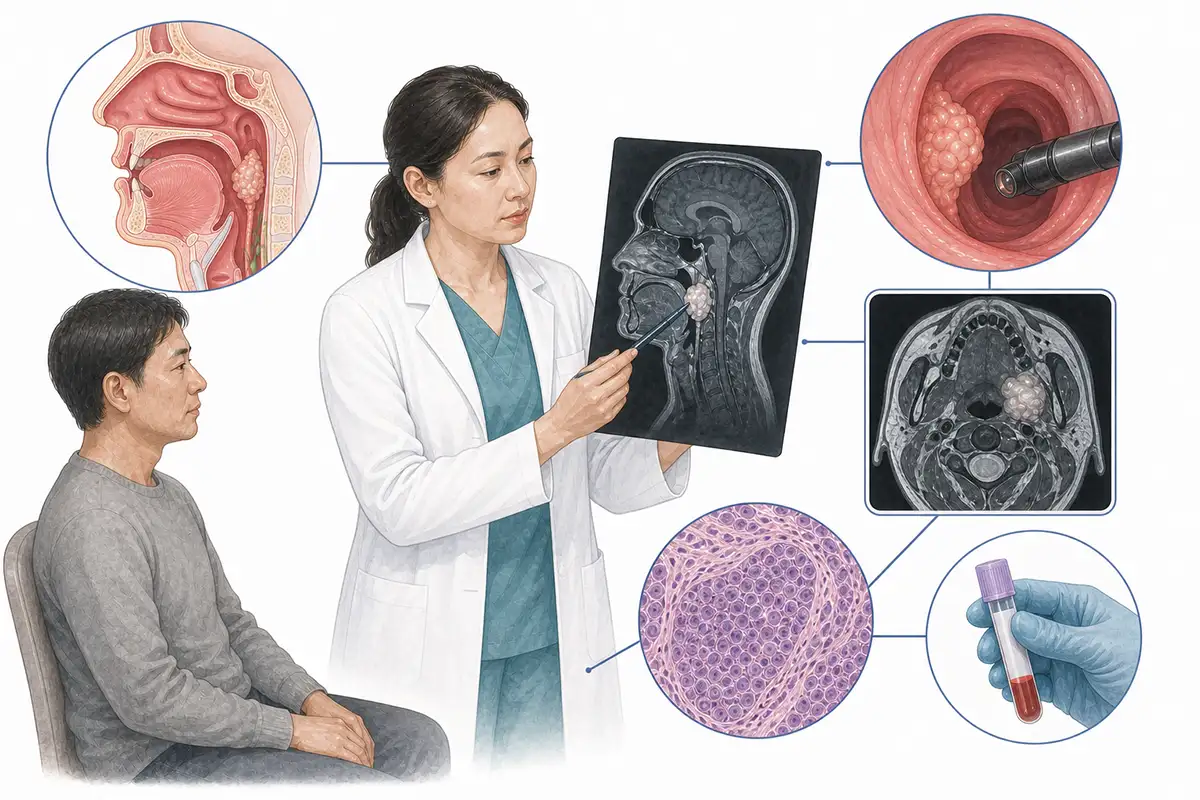
Basis for oropharyngeal cancer diagnosis
1.Laryngoscopy
Indirect or electronic laryngoscopy directly examines the oropharynx, tonsillar region, and tongue base for raised mucosa, ulcers, or cauliflower-like masses, making it important for initial screening.
2.Histopathological biopsy
Suspicious tissue is sampled with forceps under laryngoscopic guidance for pathological examination, the gold standard for diagnosing oropharyngeal cancer. Squamous cell carcinoma is the most common pathological type.
3.HPV status testing
Tumor HPV status is determined through p16 immunohistochemistry, HPV DNA PCR, or RNA in situ hybridization. HPV-positive oropharyngeal cancer has a better prognosis, and the result may guide treatment de-escalation strategies.
4.Head and neck CT scan
Contrast-enhanced CT assesses invasion depth, surrounding tissue invasion, and cervical lymph node metastasis and is an important clinical staging tool.
5.Head and neck MRI
MRI provides high soft-tissue resolution, clearly showing the tumor's relationship to surrounding muscles, blood vessels, and nerves, and is particularly suitable for assessing primary oral cancer.
6.Cervical lymph node ultrasound
High-frequency ultrasound assesses cervical lymph node metastasis and guides fine-needle aspiration biopsy of suspicious nodes to support staging.
7.Whole-body PET-CT assessment
Whole-body PET-CT assesses distant metastasis and detects small metastases missed by conventional imaging. It is particularly recommended for bulky disease or risk factors for a second primary tumor.
8.Fine-needle aspiration biopsy
Ultrasound-guided fine-needle aspiration cytology (FNA) of enlarged cervical lymph nodes is a reliable method for confirming lymph node metastasis.
9.Liquid biopsy monitoring
Circulating HPV DNA (ctHPV-DNA) is tested as a supplementary biomarker for treatment monitoring and follow-up. High sensitivity and specificity help track disease changes.
Daily Self-Check
Seek prompt care for persistent unilateral throat pain, difficulty swallowing, or a neck lump. People with HPV infection or a history of oral sex should have regular oral examinations.
Conclusion
Diagnosis relies on laryngoscopy and pathological biopsy. HPV status is crucial for prognosis and treatment decisions. HPV-positive oropharyngeal cancer has a better prognosis, and early detection facilitates organ-preserving treatment.


