


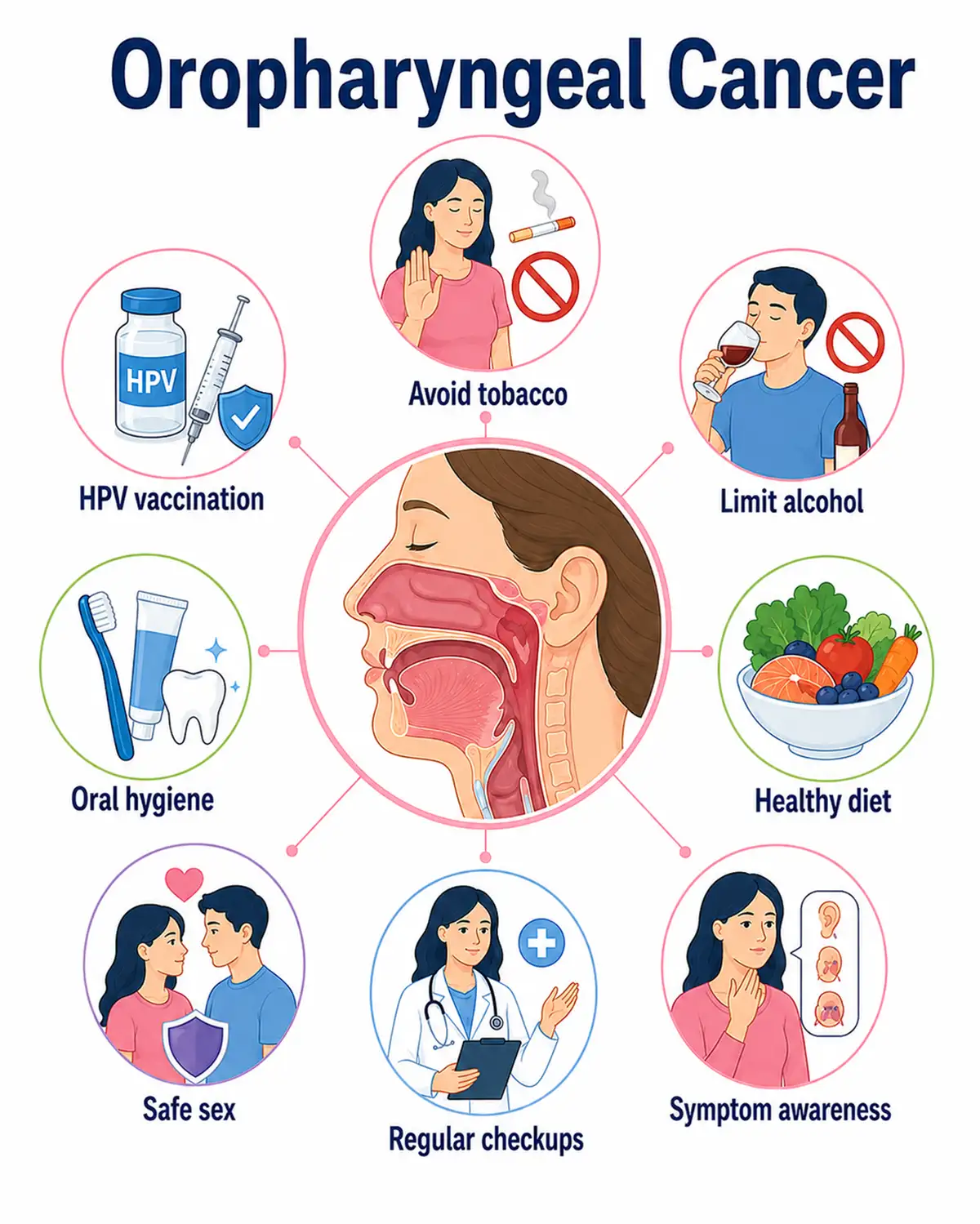
1. Safer sex
Reducing the number of sexual partners, using condoms correctly, and avoiding oral sex can lower HPV infection risk. HPV16 is the main cause of oropharyngeal cancer.
2. Smoking cessation and alcohol restriction
Smoking and heavy drinking increase oropharyngeal cancer risk. Carcinogens in tobacco and alcohol directly irritate the oropharyngeal mucosa and promote malignant cell transformation.
3. Oral hygiene
Brush twice daily, use mouthwash, have regular dental cleaning, and treat periodontal disease to reduce oral bacterial growth and chronic inflammatory irritation.
4. HPV vaccination
HPV vaccination in eligible age groups not only prevents cervical cancer but also reduces HPV-related oropharyngeal cancer risk. Early vaccination is recommended.
5. Balanced diet
Eat more fresh fruit and vegetables rich in vitamins A and C and fewer preserved and smoked foods to strengthen mucosal defenses and reduce carcinogen damage.
6. Avoiding irritants
Eat fewer excessively hot, hard, or spicy foods to avoid prolonged irritation of the oropharyngeal mucosa and prevent chronic inflammation and epithelial dysplasia.
7. Regular oral examinations
Have an oral examination annually. Long-term smokers and drinkers or people with painless neck lumps should seek prompt care to exclude early lesions.
Conclusion
Early symptoms of oropharyngeal cancer are subtle and easily overlooked, with serious consequences. Preventing HPV infection, quitting smoking, limiting alcohol, and maintaining oral hygiene, together with early detection and timely intervention, are crucial to improving prognosis.


