


Multiple myeloma is the second most common hematologic malignancy, occurring primarily in middle-aged and elderly individuals.In my country, the incidence rate is approximately 1–2 per 100,000 people.Its main clinical manifestations include bone pain, anemia, renal impairment, and hypercalcemia.Early diagnosis is difficult, and approximately 70% of patients are already in the advanced stage of the disease at the time of diagnosis.
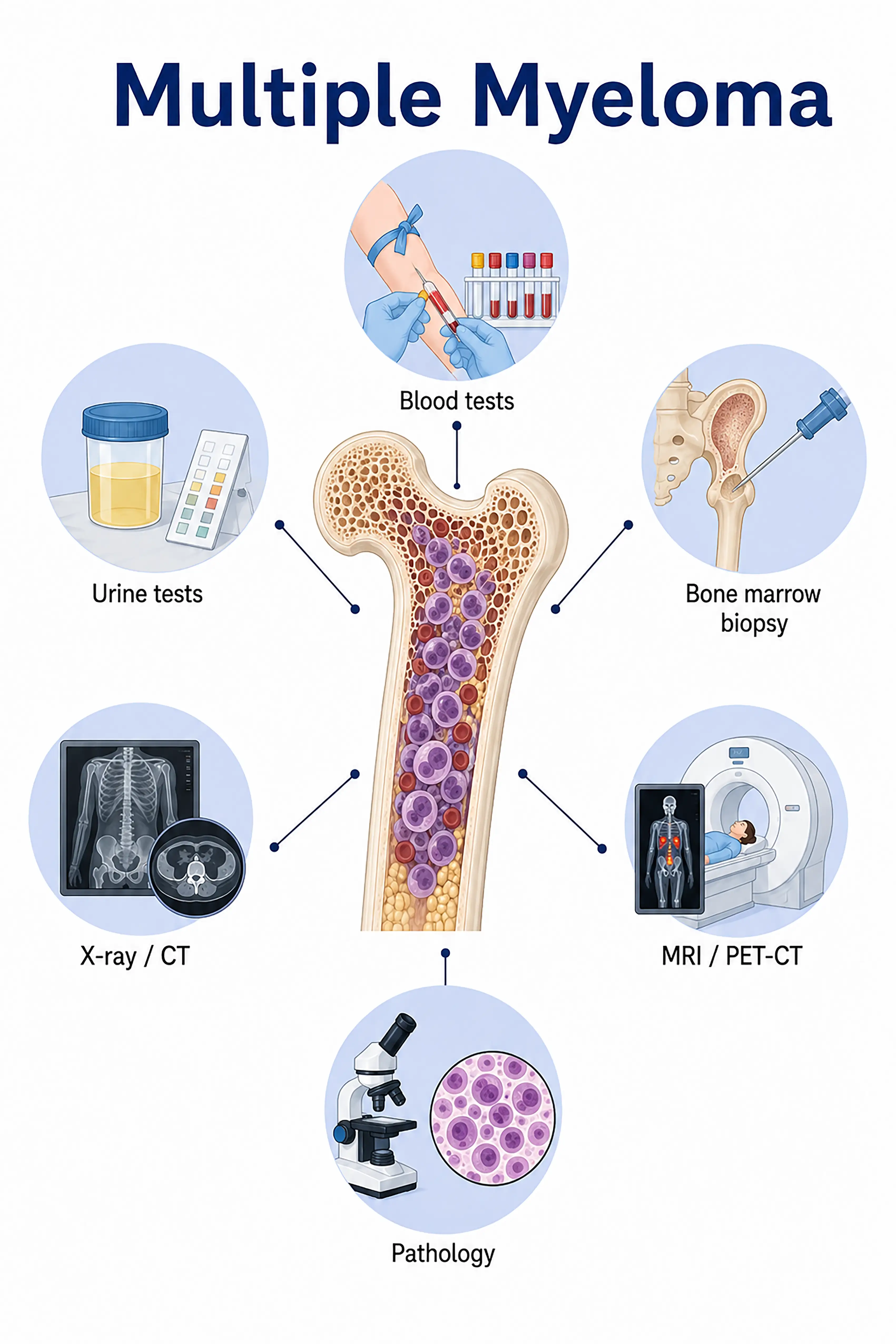
Staging and Diagnosis of Multiple Myeloma
1.Early diagnosis of multiple myeloma
Serum protein electrophoresis reveals an M-protein peak, and immunofixation electrophoresis identifies the monoclonal immunoglobulin type.Diagnosis is confirmed by a bone marrow plasma cell proportion >10%, an abnormal free light chain ratio, and evidence of target organ damage (CRAB).
2.Diagnosis of intermediate-stage multiple myeloma
Presentation of typical CRAB symptoms (hypercalcemia, renal impairment, anemia, bone disease).Bone marrow biopsy shows diffuse plasma cell infiltration; whole-body MRI or PET-CT assesses the extent of bone destruction.
3.Diagnosis of advanced multiple myeloma
Extensive bone destruction with multiple pathological fractures; renal failure.Serial bone marrow aspirations monitor clonal evolution; whole-body imaging assesses extramedullary lesions, and molecular testing guides treatment.
If not diagnosed promptly, the tumor can cause extensive bone destruction, renal failure, and recurrent infections, severely affecting quality of life and survival.
When to Seek Medical Attention
Early signs of multiple myeloma include persistent bone pain, anemia and fatigue, abnormal renal function, and manifestations of hypercalcemia.Please consult a doctor via the "Chat with Doctor" feature to facilitate early detection.During the online consultation, the doctor will ask about your symptoms and laboratory test results, and guide you through tests such as serum protein electrophoresis and bone marrow examination.

Diagnostic criteria for multiple myeloma
1.Serum protein electrophoresis
Serum protein electrophoresis can detect an M-protein (monoclonal immunoglobulin) peak and is the preferred laboratory test for screening and diagnosing multiple myeloma.
2.Immunofixation electrophoresis
Immunofixation electrophoresis identifies the heavy and light chain types of M-protein (IgG, IgA, IgD, or light chain type) and is a crucial method for definitive diagnosis and subtyping.
3.Serum free light chain test
Measure serum concentrations and the ratio of free kappa and lambda light chains; an abnormal ratio supports the diagnosis of light-chain myeloma and offers high sensitivity.
4.Bone marrow aspiration and biopsy
Bone marrow aspiration and biopsy showing an increased proportion of plasma cells (≥10%) accompanied by morphological abnormalities constitute the gold standard for diagnosing multiple myeloma.
5.Whole-body MRI
Whole-body MRI (WB-MRI) assesses bone marrow infiltration and bone destruction; it can detect early osteolytic lesions invisible on X-rays and is the preferred method for evaluating bone disease.
6.Skeletal X-ray examination
A whole-body skeletal X-ray examination reveals osteolytic lesions, osteoporosis, and pathological fractures; it is a traditional method for assessing bone damage.
7.PET-CT assessment
Whole-body PET-CT assesses extramedullary lesions, metabolic activity, and treatment response, offering significant value for prognosis and monitoring treatment efficacy.
8.Renal function and electrolytes
Measure levels of serum creatinine, blood urea nitrogen (BUN), calcium, and phosphorus to assess the degree of renal impairment and hypercalcemia.
9.Flow cytometry
Flow cytometry analysis of bone marrow specimens detects abnormal plasma cell immunophenotypes, aiding in diagnosis and monitoring for minimal residual disease.
Daily Self-Check
Seek medical attention promptly if unexplained bone pain, anemia, or abnormal renal function occurs.High-risk individuals over the age of 40 should undergo regular screening via serum protein electrophoresis.
Conclusion
Diagnosis of multiple myeloma relies on serum protein electrophoresis, free light chain testing, and bone marrow aspiration.Early diagnosis can significantly reduce complications and improve survival.


