


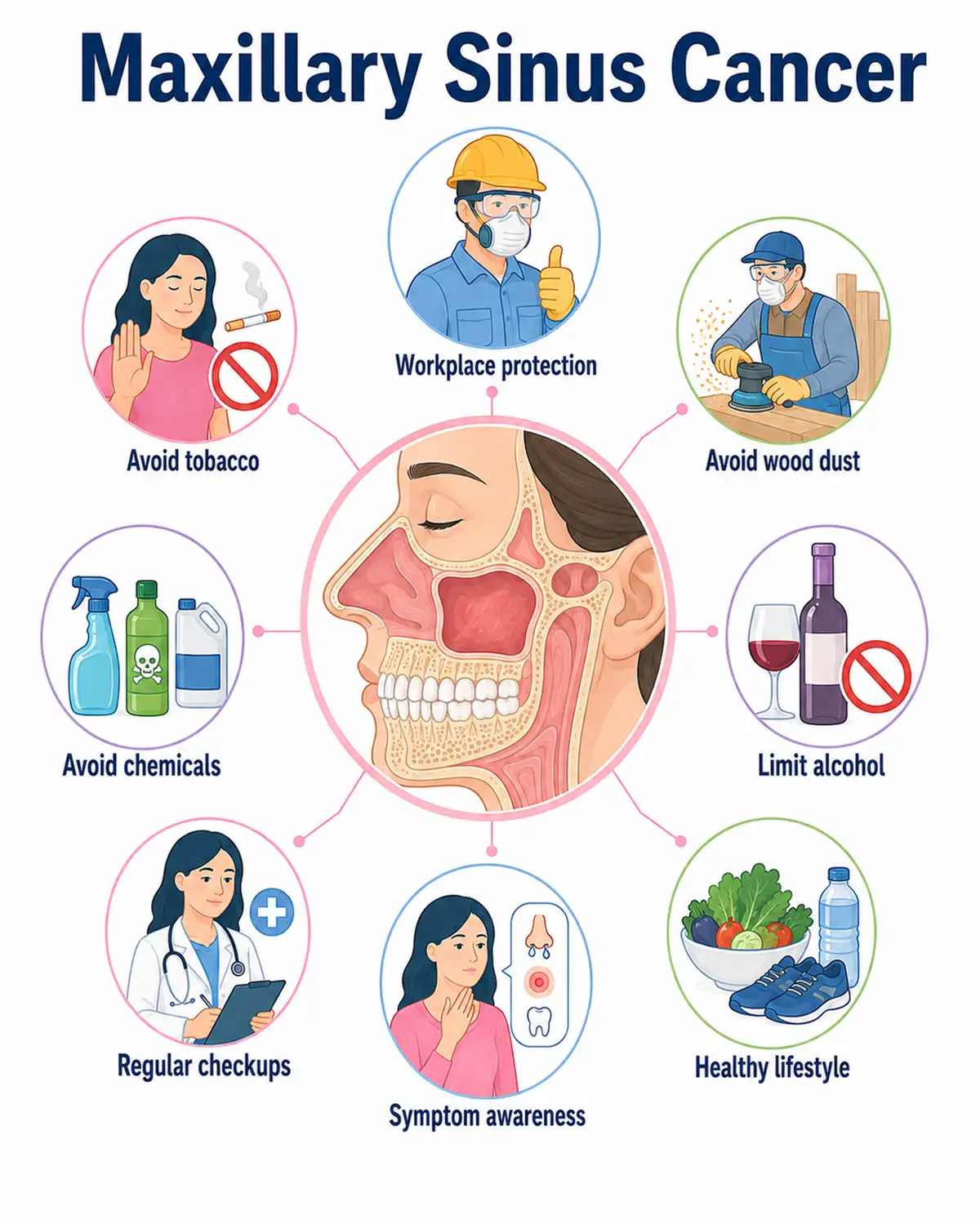
1. Occupational protection
People working in wood processing, leather manufacturing, and metal processing should use occupational protection, wearing masks and protective equipment to reduce inhalation of dust and chemicals.
2. Smoking cessation and alcohol restriction
Smoking increases maxillary sinus cancer risk. Tobacco carcinogens can directly irritate the maxillary sinus mucosa through the nasal cavity and promote malignant cell transformation.
3. Treat sinusitis
Actively treat chronic maxillary sinusitis, nasal polyps, and other benign lesions. Prolonged chronic inflammatory irritation is an important cause of malignant transformation in the maxillary sinus mucosa.
4. Avoid pollution
Reduce exposure to organic solvents and volatile chemicals such as formaldehyde and benzene, which can damage the sinus mucosa and increase malignancy risk.
5. Oral hygiene
Maintain good oral hygiene, have regular dental cleaning, and treat periodontal disease to reduce the chance of retrograde sinus infection by oral bacteria.
6. Avoiding radiation
Minimize unnecessary head and neck X-ray examinations. When radiotherapy is needed, strictly control the dose to protect the sinus mucosa and reduce radiation injury.
7. Regular physical examinations
People with prolonged exposure to high-risk environments or chronic sinusitis should have regular sinus CT examinations to detect and address suspicious lesions early.
Conclusion
Early symptoms of maxillary sinus cancer are subtle, and the disease is often advanced when detected, with serious consequences. Occupational protection, smoking cessation, and active treatment of chronic sinusitis, together with early detection and timely intervention, are crucial to improving prognosis.


