


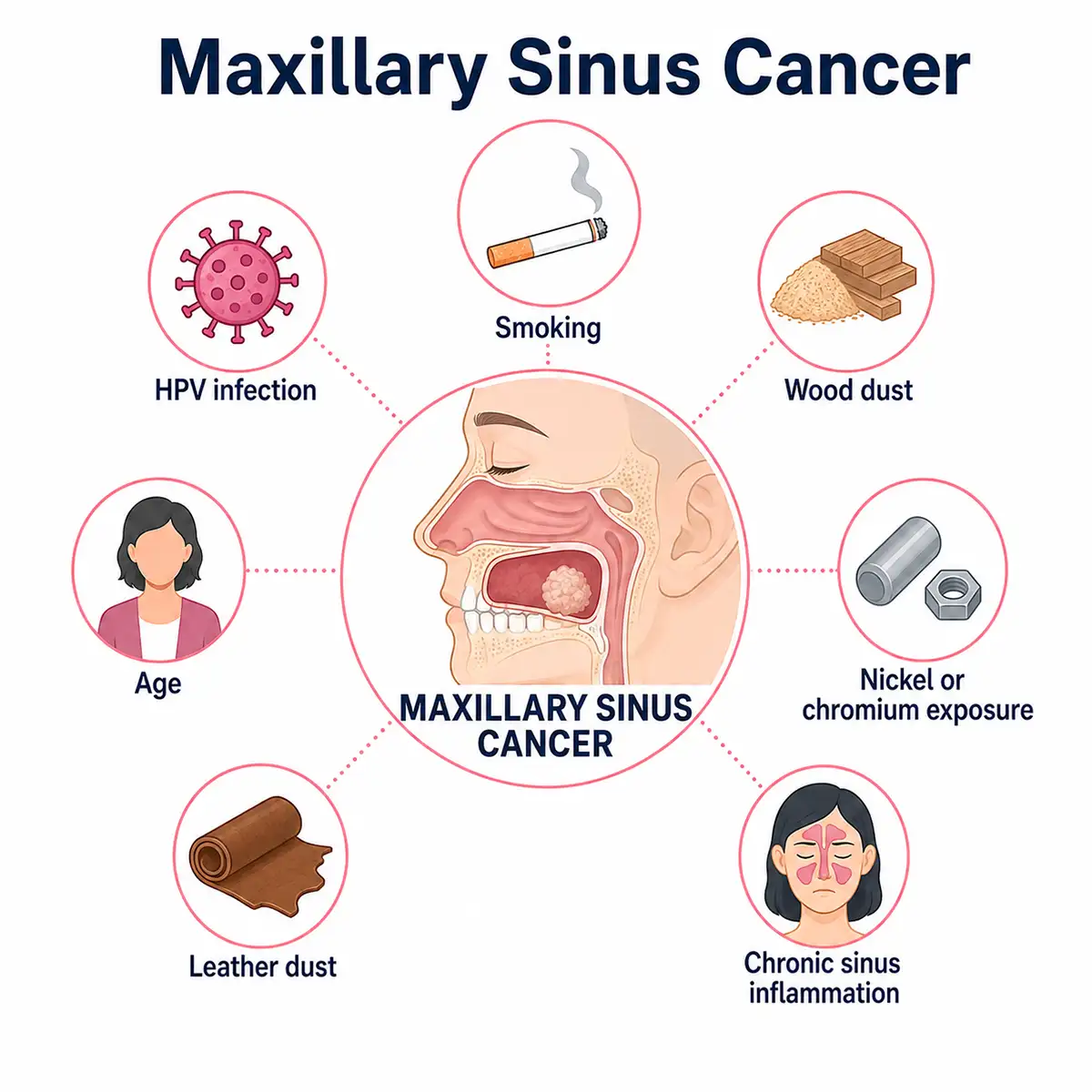
1. Occupational exposure
Workers with prolonged exposure to wood dust, leather dust, and heavy metals such as nickel and chromium have significantly increased risk. Inadequate occupational protection is an important causal factor.
2. Smoking
Tobacco carcinogens inhaled through the nose can directly affect the maxillary sinus mucosa. Long-term smokers have a significantly higher risk than nonsmokers.
3. Chronic inflammation
Long-standing chronic maxillary sinusitis, nasal polyps, and other benign lesions repeatedly irritate the mucosa. Abnormal cell proliferation and malignant transformation can occur during inflammatory repair.
4. Ionizing radiation
Head and neck radiotherapy or prolonged exposure to radioactive environments increases the risk of malignant transformation in the maxillary sinus mucosa.
5. Chemical carcinogens
Prolonged exposure to organic solvents and volatile chemicals such as formaldehyde and benzene damages the maxillary sinus mucosa and increases malignancy risk.
6. Viral infection
Human papillomavirus infection may be associated with some maxillary sinus cancers. Viral oncoproteins can disrupt the cell cycle and promote malignant transformation.
7. Genetic factors
Certain inherited gene mutations increase individual susceptibility to maxillary sinus cancer. A family history of head and neck tumors raises the risk.
Conclusion
Maxillary sinus cancer results from the combined effects of occupational exposure, chronic inflammation, and other factors. Its subtle early symptoms make it particularly harmful. People in high-risk occupations should use protective measures and have regular examinations; early detection and timely intervention are essential.


