


Central nervous system (CNS) tumors are neoplasms arising from structures such as the brain and spinal cord tissue, meninges, nerve sheaths, the pituitary gland, and the pineal gland.According to the WHO classification of CNS tumors, they encompass various types—including gliomas, meningiomas, ependymomas, medulloblastomas, pituitary adenomas, and acoustic neuromas—and can be benign or malignant;malignant tumors can be life-threatening.
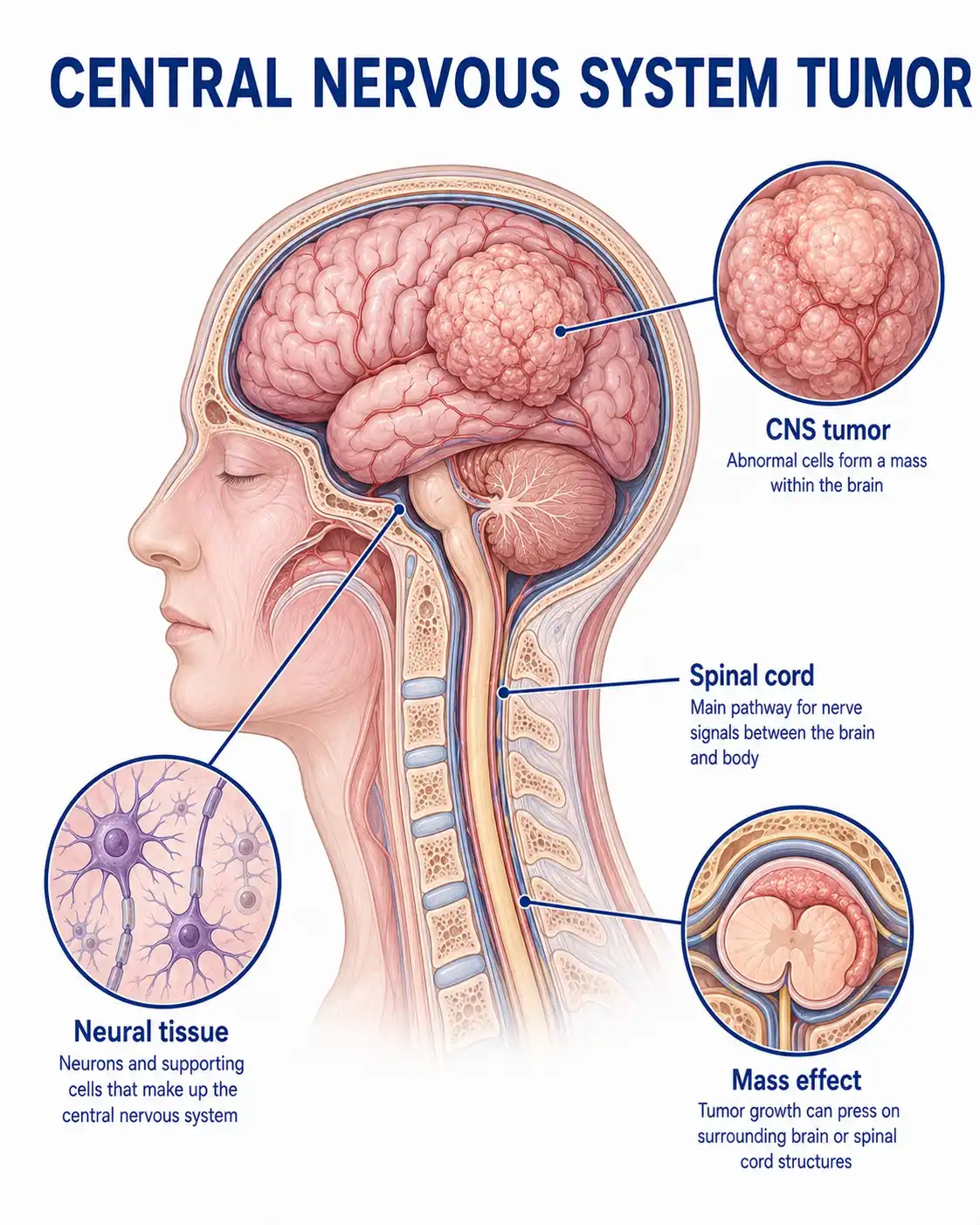
Global overview of central nervous system tumors
The global annual incidence of primary central nervous system tumors is approximately 6–8 cases per 100,000 people, accounting for about 1.6% of all malignant tumors.Gliomas are the most common primary malignant brain tumors, with glioblastomas constituting over 50% of all gliomas.Meningiomas are the most common benign brain tumors.Central nervous system tumors can occur at any age, though certain types show predilections for specific age groups and genders.
Consult a doctor regarding cancer-related issues
Seek prompt medical attention from a neurosurgeon or neurologist if symptoms such as persistent or progressively worsening headache, nausea and vomiting, visual changes, limb numbness or weakness, seizures, or impaired balance and coordination occur.Once diagnosed, a multidisciplinary team should formulate an individualized, comprehensive treatment plan.
Main types of central nervous system tumors
1.Astrocytic glioma
Originates in astrocytes; classified by the WHO into grades I through IV. Higher grades indicate greater malignancy; Grade IV is glioblastoma, the most common malignant brain tumor.
2.Meningioma
Originates from meningothelial cells of the arachnoid granulations; typically a benign, slow-growing tumor; most common in middle-aged women; frequently located near the sagittal sinus or on the cerebral convexity; prognosis is good following complete surgical resection.
3.Pituitary adenoma
Originating from glandular cells of the anterior pituitary, this tumor is classified as either functional (hormone-secreting) or non-functional; it can cause endocrine disorders and visual/visual field disturbances, and is the most common tumor in the sellar region.
4.Acoustic neuroma
Originating from Schwann cells of the vestibular nerve sheath, this is a benign tumor that typically occurs in the cerebellopontine angle; it manifests as unilateral hearing loss, tinnitus, and balance disorders, and can compress the brainstem, posing a threat to life.
5.Medulloblastoma
This is the most common malignant brain tumor in children; it originates in the cerebellar vermis, is highly malignant, prone to cerebrospinal fluid seeding and metastasis, and sensitive to radiotherapy and chemotherapy, requiring comprehensive treatment and long-term follow-up.
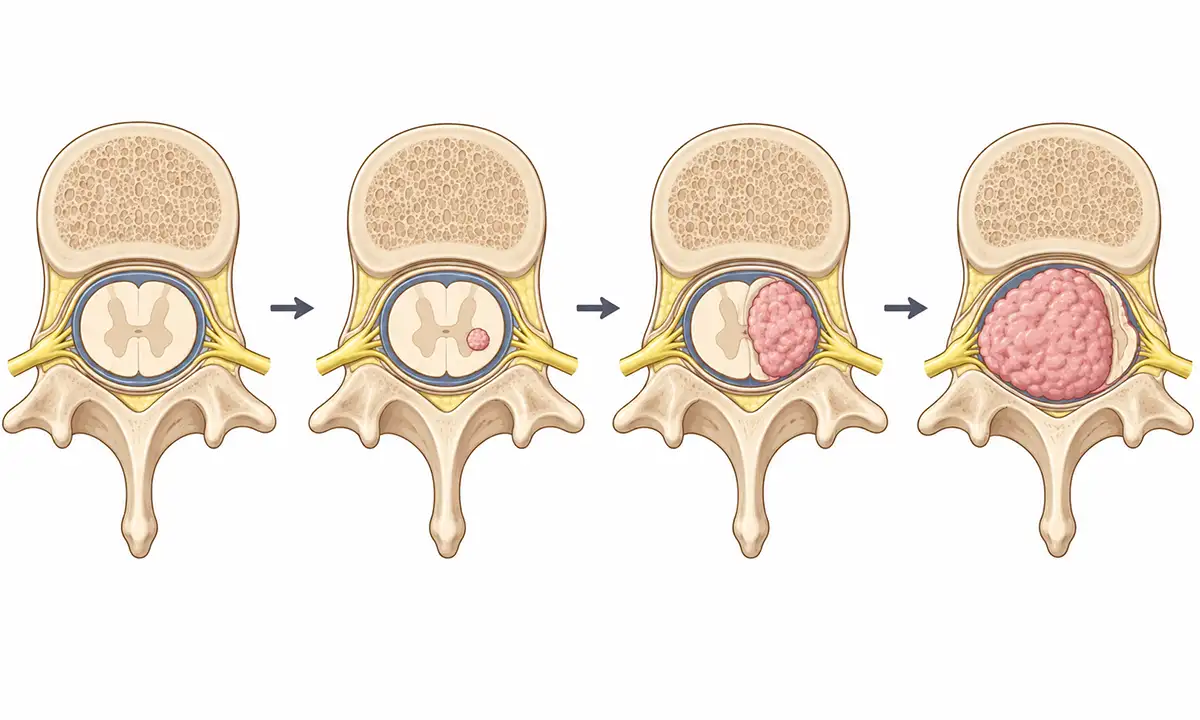
Typical symptoms and signs of central nervous system tumors
1.Increased intracranial pressure
The tumor mass and cerebral edema cause increased intracranial pressure, manifesting as progressively worsening headache, morning vomiting, papilledema, and a decline in the level of consciousness.
2.Epileptic seizure
Tumor irritation or compression of the cerebral cortex causes focal or generalized epileptic seizures; these may be the initial symptom and serve as an important warning sign of a brain tumor, necessitating an evaluation to rule out tumors in cases of new-onset epilepsy.
3.Motor and sensory disturbances
Tumor compression or invasion of the sensorimotor cortex and conduction pathways leads to contralateral limb weakness, numbness, sensory loss, or ataxia.
4.Changes in visual acuity and visual field
Tumor compression of the optic nerve, optic chiasm, or optic tract can cause vision loss, visual field defects, or diplopia; pituitary tumors typically present with bitemporal hemianopia.
5.Cognitive and psychiatric changes
Frontal and temporal lobe tumors can cause memory decline, personality changes, emotional abnormalities, and impaired judgment, manifesting as apathy, irritability, or abnormal behavior.
6.Hearing and balance disorders
Posterior fossa tumors, such as acoustic neuromas, can cause unilateral hearing loss, tinnitus, vertigo, and gait instability; tumor enlargement may compress the brainstem, leading to difficulties with articulation and swallowing.
Diagnostic methods for CNS tumors
1.Neurological examination
A comprehensive neurological examination assesses consciousness, cranial nerves, motor and sensory functions, reflexes, and coordination to preliminarily determine tumor localization and the extent of neurological deficits.
2.Head CT scan
CT can rapidly detect intracranial space-occupying lesions, calcification, hemorrhage, and hydrocephalus, as well as assess ventricular compression and midline shift; it is the preferred imaging modality for emergency assessment and initial screening.
3.Magnetic resonance imaging (MRI)
MRI is the most important method for diagnosing central nervous system tumors; multi-sequence, multi-planar imaging precisely displays tumor location, size, morphology, and relationships with surrounding structures.
4.Contrast-enhanced MRI scan
Contrast-enhanced scanning following the intravenous injection of a contrast agent allows for the assessment of tumor blood supply and the extent of blood-brain barrier disruption, aiding in the differentiation of tumor type and malignancy grade.
5.Stereotactic biopsy
For tumors located deep within the brain, in functional areas, or deemed unresectable, stereotactic biopsy to obtain tissue samples for pathological examination serves as the gold standard for definitive diagnosis.
6.Molecular pathology testing
Detecting molecular markers such as IDH mutations, 1p/19q co-deletion, MGMT methylation, and BRAF mutations enables precise classification and guides prognostic assessment and personalized treatment.
What are the treatment methods for CNS tumors
1.Microsurgery: specifically microsurgery assisted by a neuronavigation system—is the primary treatment modality for central nervous system tumors.It aims to achieve maximal tumor resection within safe limits, alleviate the mass effect, and obtain pathological specimens.
2.Neuroendoscopic surgery: Endoscopic endonasal resection of pituitary adenomas and other sellar region tumors, or endoscopic intraventricular resection of intraventricular tumors; characterized by minimal trauma and rapid recovery, it is a key technique in minimally invasive neurosurgery.
3.Radiotherapy: Postoperative adjuvant radiotherapy is used to kill residual tumor cells.IMRT, proton therapy, and stereotactic radiosurgery enable precise targeted irradiation, maximizing the protection of normal nerve tissue.
4.Chemotherapy: Temozolomide is the standard chemotherapeutic agent for gliomas and is capable of crossing the blood-brain barrier.Other regimens, such as PCV, are used for oligodendrogliomas; chemotherapy is often administered concurrently with or sequentially to radiotherapy.
5.Targeted therapy: Drugs targeting specific molecular targets—such as bevacizumab for recurrent high-grade glioma and BRAF inhibitors for BRAF-mutated tumors—are used to precisely inhibit tumor growth.
6.Tumor Treating Fields (TTFields) therapy: A portable device inhibits tumor proliferation by disrupting tumor cell mitosis; it is used in combination with temozolomide for the maintenance treatment of newly diagnosed glioblastoma.
7.Immunotherapy: Emerging immunotherapies—such as immune checkpoint inhibitors, oncolytic viruses, tumor vaccines, and CAR-T cell therapy—are being actively explored in clinical trials for central nervous system tumors.
8.Rehabilitative support: Glucocorticoids to control tumor-associated cerebral edema; antiepileptic drugs to prevent and treat seizures; nutritional support, physical therapy, and occupational rehabilitation to help patients restore neurological function and quality of life.
Conclusion
Treatment for central nervous system tumors is primarily surgical; a comprehensive strategy combining surgery with radiotherapy, chemotherapy, and emerging therapies can prolong patient survival and improve quality of life.Precision therapy guided by molecular markers and emerging immunotherapies offer new hope to patients.


