


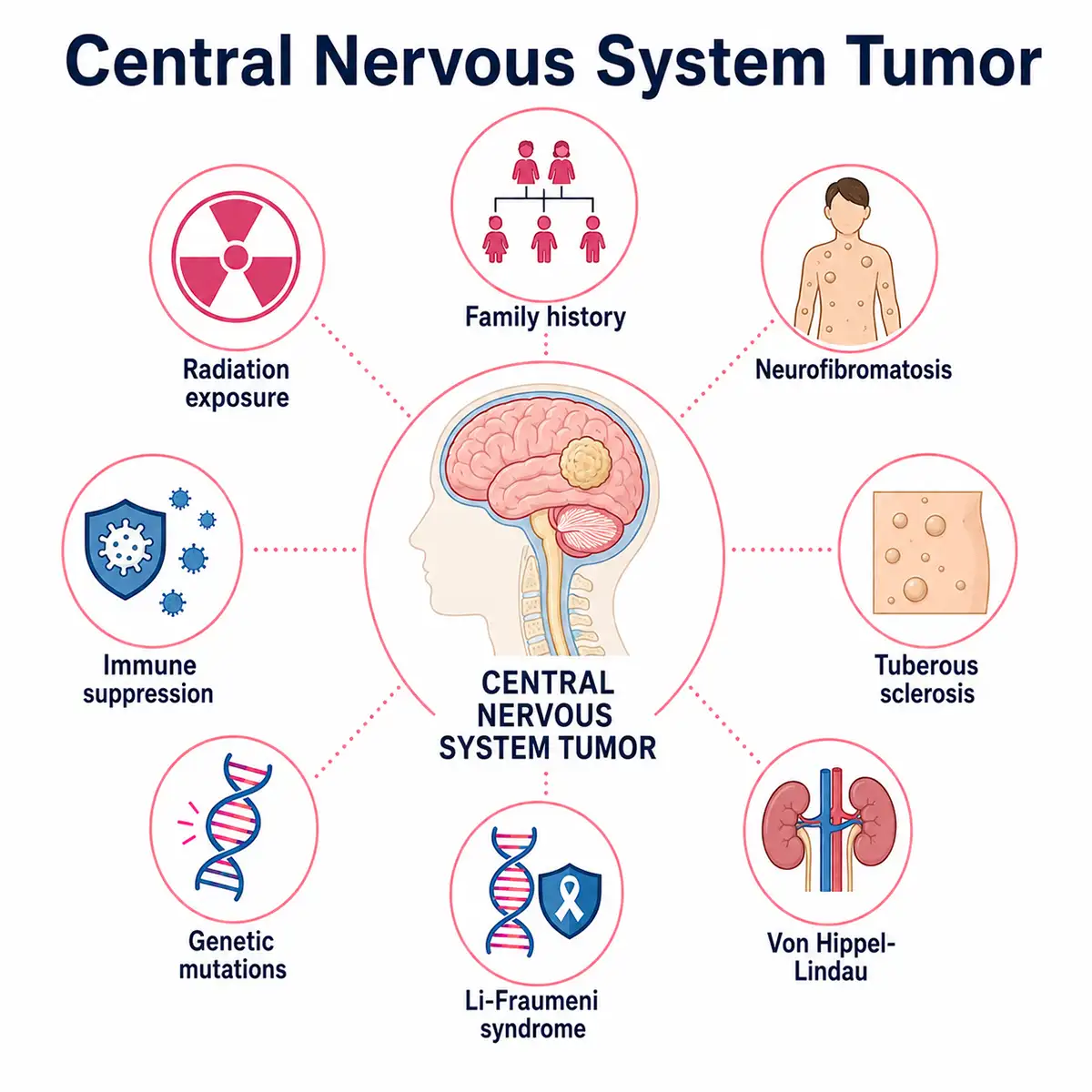
1. Ionizing radiation
High-dose ionizing radiation is the only established environmental risk factor for central nervous system tumors; the latency period for tumor development following radiotherapy can span decades.
2. Genetic syndromes
Conditions such as Li-Fraumeni syndrome, neurofibromatosis, tuberous sclerosis, and von Hippel-Lindau disease significantly increase the risk of developing the condition.
3. Gene mutation
Mutations in tumor suppressor genes such as *TP53*, *NF1*, *NF2*, and *VHL* constitute the primary molecular basis for hereditary central nervous system tumors.
4. Viral infection
Epstein-Barr virus (EBV) is closely associated with primary central nervous system lymphoma, while JC virus may be linked to oligodendroglioma.
5. Nitroso compounds
Nitroso compounds in pickled foods and tobacco can be converted into potent carcinogens, increasing the risk of central nervous system tumors such as gliomas.
6. Hormonal factors
Meningioma cells possess progesterone receptors; the incidence is higher in women than in men, and hormone replacement therapy may increase the risk of meningioma.
7. Age factors
Different types of central nervous system tumors have different peak incidence ages; medulloblastomas and ependymomas are more common in children, while gliomas and meningiomas are more common in adults.
Conclusion
CNS tumors result from the interplay of various factors, such as ionizing radiation and genetic syndromes; they can compress neural tissue and cause serious harm.For individuals with genetic syndromes, regular imaging screening is crucial to ensure early detection and timely intervention.


