


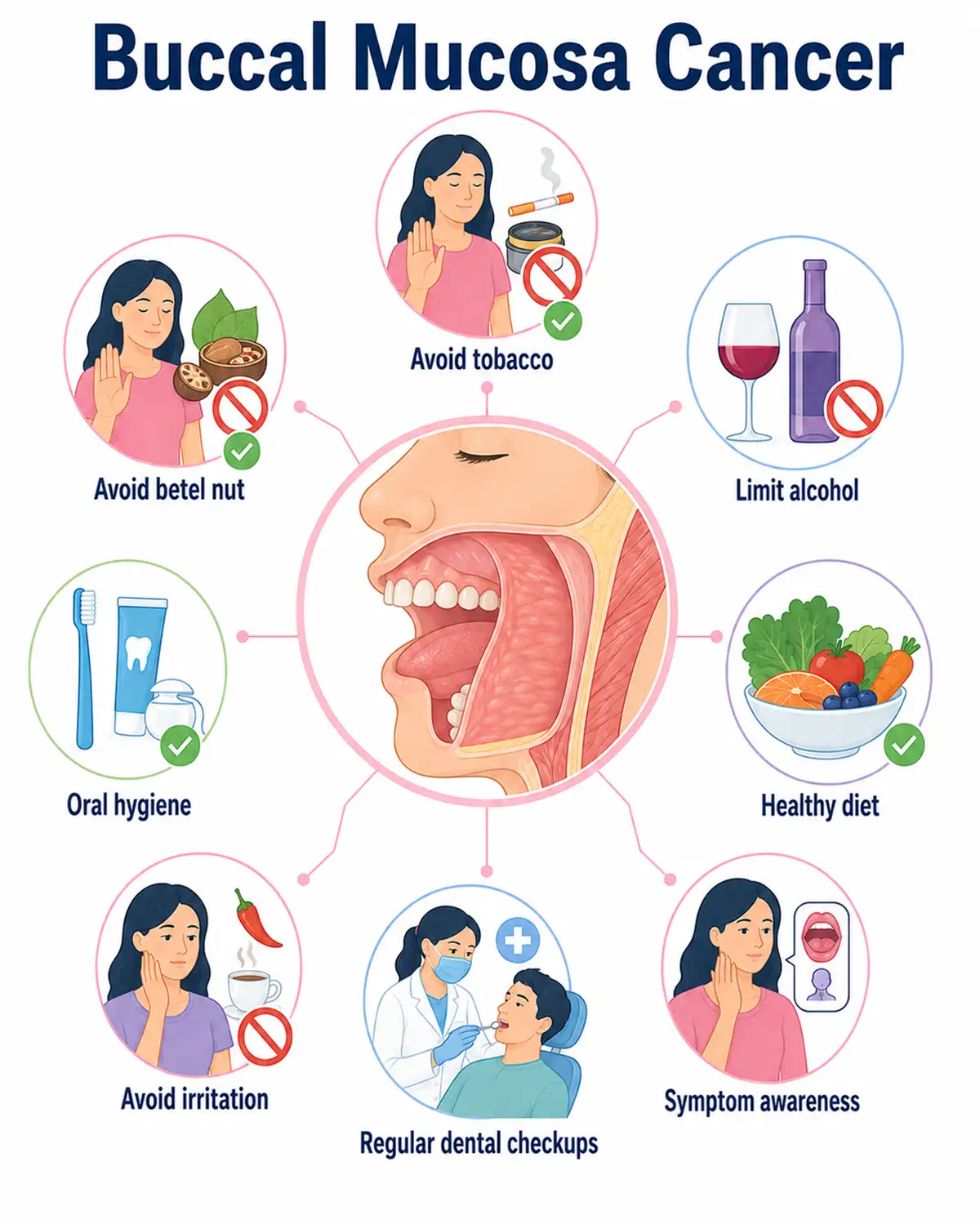
1. Quitting betel nut chewing
Arecoline has established carcinogenic effects and can cause oral submucous fibrosis. Long-term betel nut chewing is the leading risk factor for buccal mucosal cancer and should be stopped immediately.
2. Smoking cessation and alcohol restriction
Tobacco carcinogens directly irritate the buccal mucosa, while alcohol damages the mucosal barrier and promotes carcinogen absorption. Together, they significantly increase cancer risk.
3. Oral hygiene
Brush twice daily and floss between teeth, have regular dental cleaning, and treat tooth decay to reduce oral bacterial growth and nitrosamine formation.
4. Removal of irritants
Remove sharp tooth cusps and residual roots and replace poorly fitted restorations to avoid prolonged mechanical friction on the cheek mucosa that can cause chronic inflammation and cancer.
5. Balanced diet
Eat more fresh fruit and vegetables rich in vitamins and trace elements and less spicy, irritating, and preserved food to strengthen mucosal defenses.
6. Watch for white patches
Seek prompt care for white or red buccal patches or persistent ulcers. These precancerous lesions may develop into invasive cancer if not addressed promptly.
7. Regular oral examinations
Have an oral examination every six months to one year. People with a history of betel nut chewing or smoking should undergo closer screening to detect suspicious lesions early.
Conclusion
Buccal mucosal cancer results from the combined effects of betel nut chewing, smoking, and other factors and can seriously impair eating and speech. Giving up betel nuts, maintaining oral hygiene, and regular oral examinations for early detection and timely intervention are essential.


