


Colon cancer is a tumor resulting from the malignant proliferation of epithelial cells in the colonic mucosa.The colon—comprising the cecum, ascending colon, transverse colon, descending colon, and sigmoid colon—is a vital part of the digestive tract.
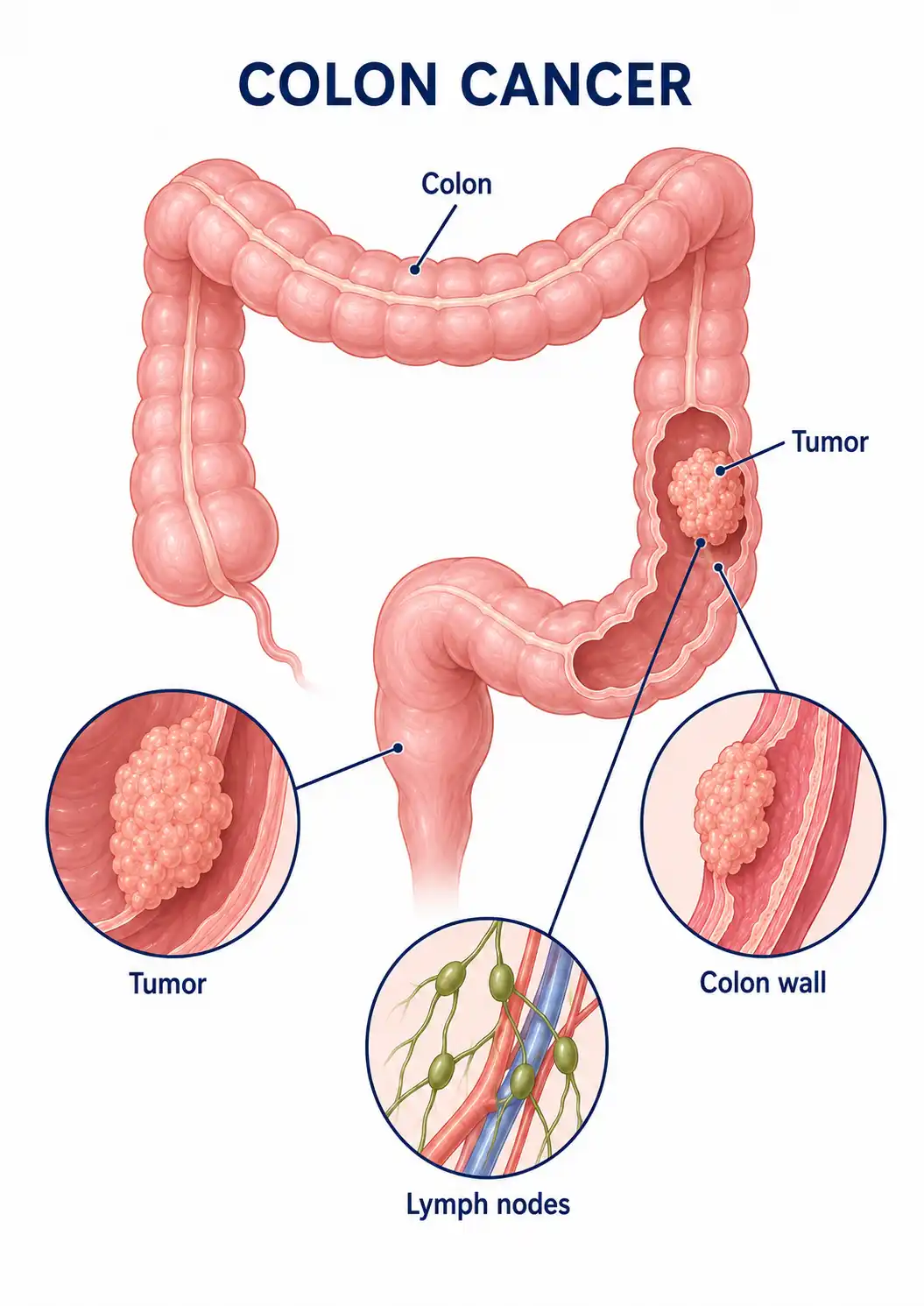
Global overview of colon cancer
Colon cancer ranks high among malignant tumors worldwide, and its incidence in my country has been rising in recent years.The early diagnosis rate is low; most patients are diagnosed at an intermediate or advanced stage.
Consult a doctor regarding cancer-related issues
Individuals presenting with symptoms such as abdominal pain, blood in the stool, changes in bowel habits, an abdominal mass, or unexplained anemia should promptly consult a gastroenterologist or general surgeon for examination.
Main types of colon cancer
1. Right-sided colon cancer
Occurs in the cecum and ascending colon; primary manifestations include an abdominal mass, abdominal pain, and anemia. The tumors are often large and prone to necrosis and infection.
2. Left-sided colon cancer
Occurs in the descending colon and sigmoid colon; presents primarily with bloody stools, changes in bowel habits, and intestinal obstruction; the tumor often exhibits infiltrative growth, leading to narrowing of the intestinal lumen.
3. Adenocarcinoma types
It is the most common pathological type of colon cancer, accounting for over 95% of cases; it is classified by the degree of differentiation into well-, moderately-, and poorly differentiated adenocarcinomas.
4. Mucinous adenocarcinoma
Cancer cells secrete large amounts of mucus; this subtype accounts for approximately 10% of colon cancers. It carries a poorer prognosis than ordinary adenocarcinoma and is commonly seen in hereditary non-polyposis colon cancer.
5. Signet-ring cell carcinoma
A special subtype of poorly differentiated adenocarcinoma characterized by signet-ring-shaped cancer cells; it is highly aggressive, carries a very poor prognosis, and is relatively common in young patients.
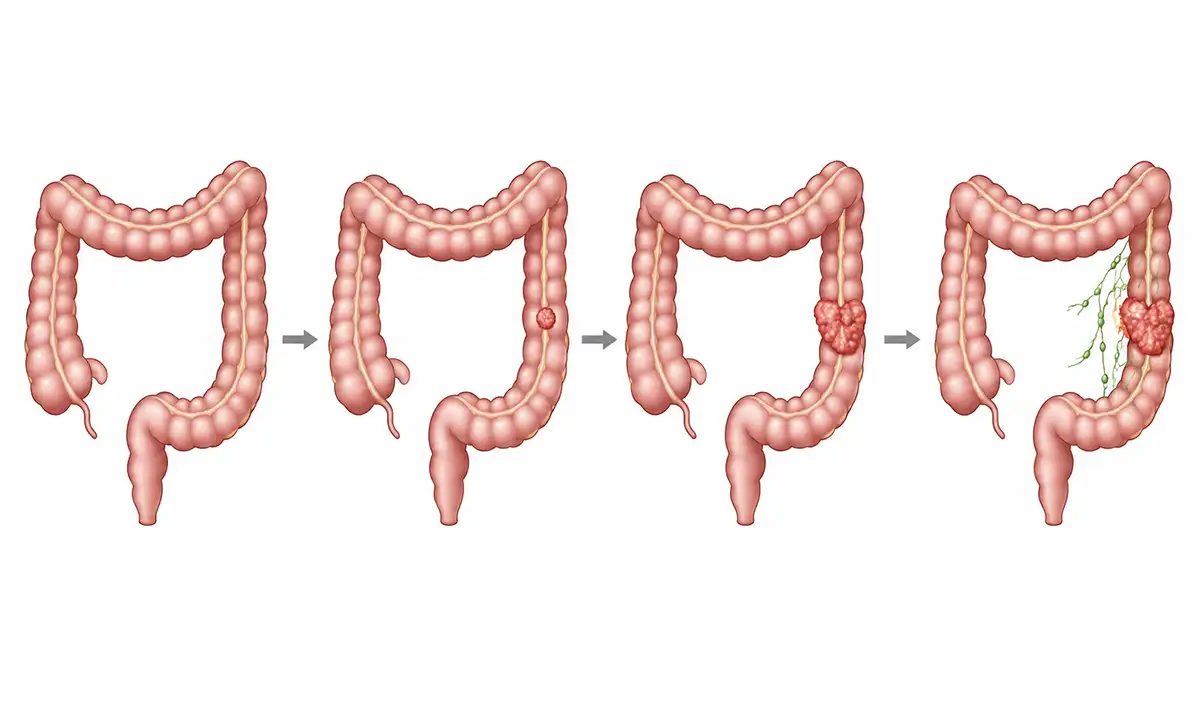
Typical symptoms and signs of colon cancer
1. Abdominal pain and distension
Persistent dull or distending abdominal pain occurs; right-sided colon cancer commonly presents with right lower quadrant pain, while left-sided colon cancer may present with left lower quadrant cramping and abdominal distension.
2. Bloody and frequent stools
Stools containing blood or appearing dark red are more common in left-sided colon cancer; symptoms include increased bowel frequency, tenesmus, and a sensation of incomplete evacuation.
3. Change in bowel habits
Alternating diarrhea and constipation occur; left-sided colon cancer is prone to causing progressive constipation, with stools becoming thin and pencil-like.
4.Abdominal mass
Right-sided colon cancer often presents initially with an abdominal mass; a hard mass with an irregular surface can be palpated in the right lower quadrant.
5. Anemia and weight loss
Chronic tumor bleeding leads to iron-deficiency anemia, manifesting as pallor, fatigue, and dizziness, accompanied by unexplained weight loss.
6. Intestinal obstruction
Left-sided colon cancer frequently causes luminal narrowing leading to obstruction; clinical manifestations include abdominal distension, abdominal pain, vomiting, and cessation of passing gas and stool.
Diagnostic methods for colon cancer
1. Colonoscopy
Colonoscopy is the gold standard for diagnosing colon cancer; it allows for direct visualization of the colonic mucosa, the detection of lesions, and the performance of biopsies to obtain a pathological diagnosis.
2. Contrast-enhanced CT scan
Contrast-enhanced abdominal CT allows for the assessment of tumor location, size, depth of invasion, lymph node metastasis, and distant organ metastasis.
3. Tumor markers
CEA and CA19-9 are commonly used serological markers; the extent of their elevation correlates with tumor burden, and they can be used for auxiliary diagnosis and postoperative monitoring.
4. Air-barium double-contrast radiography
Air-barium double-contrast radiography can reveal filling defects, niche shadows, and luminal narrowing in the colon, aiding in the assessment of the extent of the lesion.
5. Endoscopic ultrasound
Endoscopic ultrasonography clearly visualizes the layers and depth of tumor invasion into the intestinal wall, as well as the status of regional lymph node metastasis.
6. Chest CT scan
Chest CT is used to rule out pulmonary metastasis and is an essential component of routine preoperative staging examinations.
Colon Cancer Treatment Methods
1. Surgical treatment
Radical surgery for colon cancer involves resecting the intestinal segment containing the tumor and the regional lymph nodes;the specific procedure—right hemicolectomy, left hemicolectomy, or sigmoidectomy—is selected based on the tumor's location.
2. Laparoscopic surgery
Laparoscopic resection for colon cancer is minimally invasive and allows for rapid recovery; it has become a standard procedure and achieves oncological outcomes comparable to open surgery.
3. Chemotherapy
Postoperative adjuvant chemotherapy can reduce the risk of recurrence, while neoadjuvant chemotherapy can shrink the tumor to facilitate surgery; oxaliplatin-based regimens are commonly used.
4. Targeted therapy
Targeted drugs such as bevacizumab and cetuximab can be used to treat advanced colon cancer; combining them with chemotherapy can prolong patient survival.
5. Immunotherapy
PD-1 inhibitors are suitable for patients with advanced colon cancer exhibiting high microsatellite instability (MSI-H), offering durable disease control.
6. Radiotherapy
Postoperative adjuvant radiotherapy can reduce the risk of local recurrence, while palliative radiotherapy can alleviate symptoms such as bleeding and pain.
7. Stoma care
Some patients require a temporary or permanent intestinal stoma postoperatively; proper stoma care is crucial for maintaining quality of life.
8. Follow-up monitoring
Postoperative follow-up involving regular colonoscopy, abdominal CT, and tumor marker testing is essential to monitor for recurrence and metachronous multiple primary cancers.
Conclusion
Colon cancer is a common malignant tumor of the digestive tract; early symptoms are often subtle and easily overlooked.Early detection through colonoscopy screening and comprehensive treatment—primarily surgery—can help improve patient prognosis.


