


1. Dietary fiber
Chronic insufficient dietary fiber intake slows intestinal motility and hinders bowel movements, prolonging the contact time between the bowel and carcinogens, thereby increasing the risk of colon cancer.
2. Red meat intake
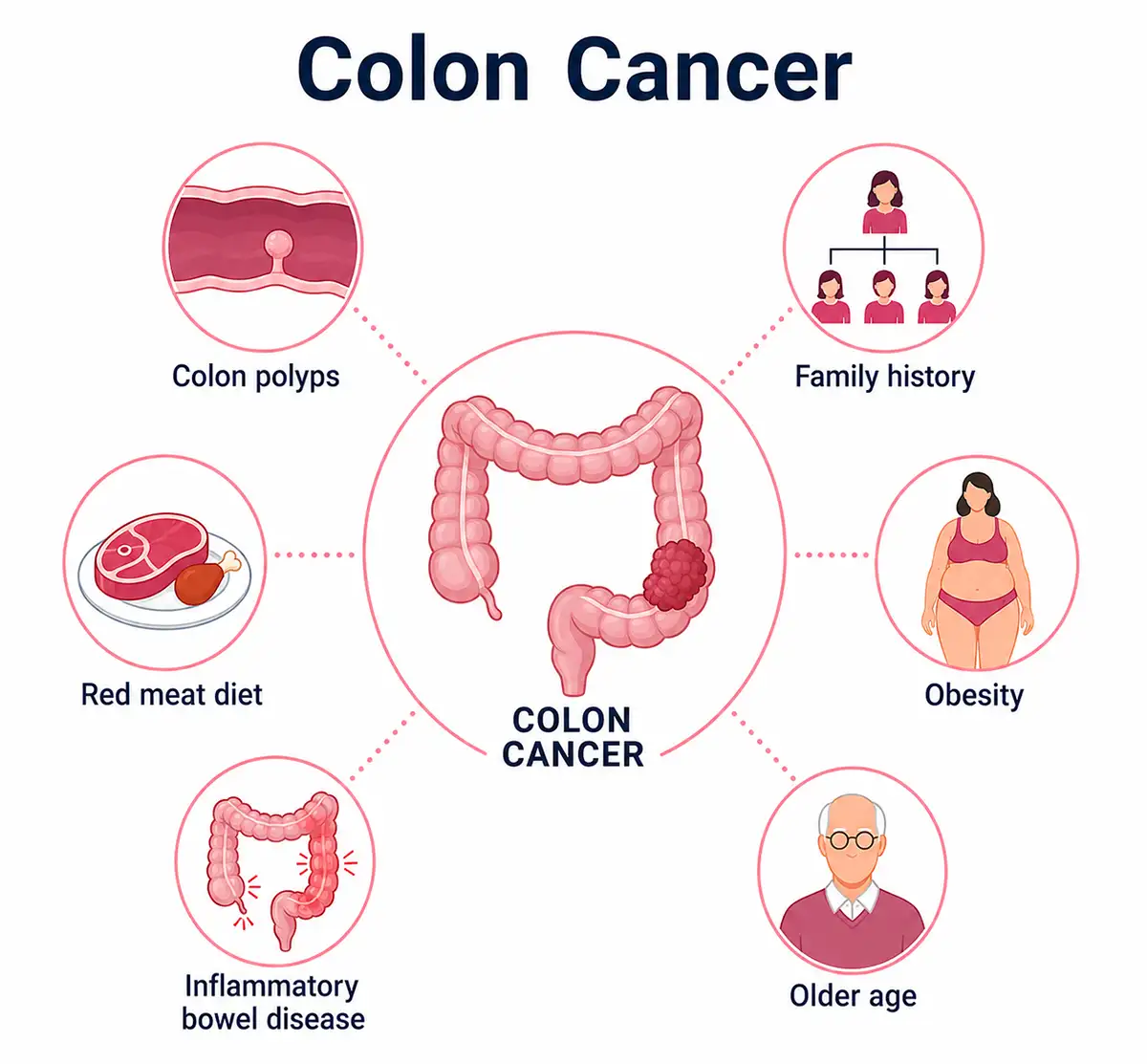
High, long-term intake of red meat and processed meat increases the risk of colon cancer; heterocyclic amines produced during high-temperature cooking are known carcinogens.
3. Genetic factors
Hereditary conditions such as familial adenomatous polyposis and Lynch syndrome significantly increase the risk of colon cancer; the risk is elevated for first-degree relatives of affected individuals.
4. Malignant transformation of polyps
Colonic adenomatous polyps are the primary precancerous lesions for colon cancer; polyps that are large in size or have a high proportion of villous components carry a higher risk of malignant transformation.
5. Sedentary lifestyle
A sedentary lifestyle and lack of physical exercise increase the risk of colon cancer; physical activity promotes intestinal motility and boosts immune function.
6. Alcohol consumption and smoking
Long-term, heavy alcohol consumption and smoking increase the risk of colon cancer; carcinogens in alcohol and tobacco can directly damage the epithelial cells of the colonic mucosa.
7. Diabetes
Insulin resistance and hyperinsulinemia in patients with type 2 diabetes can promote cell proliferation, increasing the risk of colon cancer by approximately 30% compared to the general population.
Conclusion
Colon cancer results from a combination of causes, including poor diet and genetic factors; early symptoms are often subtle, yet the disease poses a serious threat.Increasing dietary fiber intake, engaging in regular exercise, and undergoing routine colonoscopy screenings to ensure early detection and timely intervention are crucial.


