


Tongue cancer arises from malignant transformation of tongue mucosal epithelial cells. Early symptoms are usually nonspecific, including persistent tongue ulcers, lumps, and pain. It comprises oral tongue and tongue base cancer, with the oral tongue type more common.
Tongue cancer prevalence worldwide
Tongue cancer ranks among the most frequent oral malignancies worldwide and is the most common oral cancer. Incidence is higher in Southeast Asia and is associated with smoking, drinking, and betel nut chewing. Men are affected more often, usually at ages 40-60.
Tongue cancer symptoms by stage
1.Early-stage tongue cancer symptoms
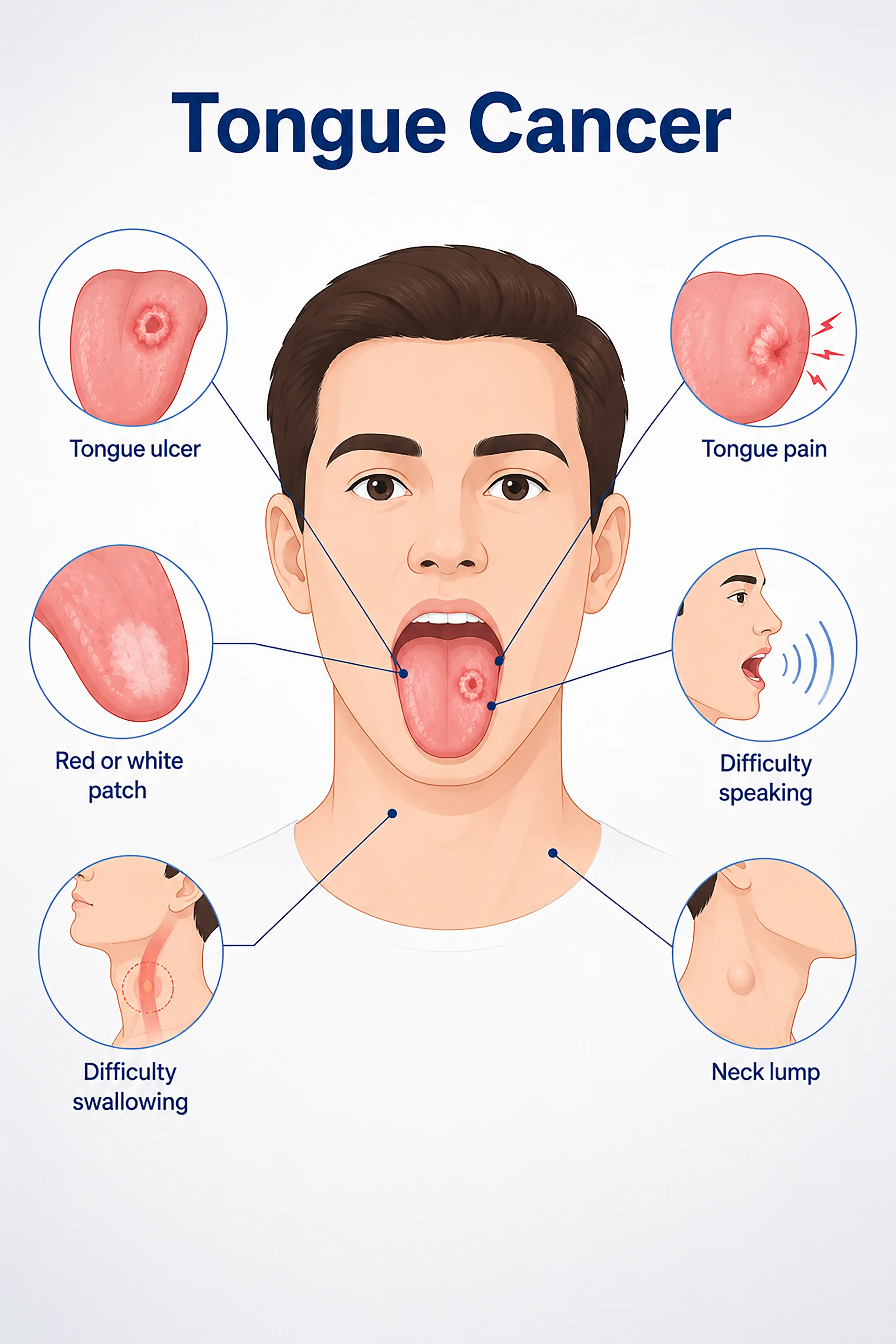
The tumor is confined to the tongue mucosa, presenting as a small ulcer or white patch on the tongue border, mild pain, and discomfort when eating, easily mistaken for an ordinary mouth ulcer.
2.Intermediate-stage tongue cancer symptoms
The ulcer enlarges and deepens, pain worsens and radiates to the ear, and restricted tongue movement affects speech and swallowing. Enlarged ipsilateral cervical lymph nodes may be palpable.
3.Advanced-stage tongue cancer symptoms
Extensive invasion of tongue muscles and floor-of-mouth tissue causes tongue fixation, major bleeding, severe bad breath, extensive cervical lymph node metastasis, and distant organ metastasis.
When to Seek Medical Attention
Early signs of tongue cancer include a tongue ulcer lasting more than two weeks, a tongue lump, worsening pain, and restricted movement. Consult a doctor through "Chat with a Doctor" for early detection. During an online consultation, the doctor will ask about your oral hygiene habits and symptoms and guide you toward oral examination and biopsy.
Tongue cancer stages
Stage 0 tongue cancer
Cancer cells are confined to the tongue mucosal epithelium, representing carcinoma in situ, with white or red patches and no obvious symptoms.
Stage I tongue cancer
The tumor is less than two centimeters in diameter, with invasion depth no more than five millimeters and no lymph node metastasis. It presents as a small ulcer or induration with mild pain.
Stage II tongue cancer
The tumor is two to four centimeters in diameter or has an invasion depth exceeding five millimeters, without lymph node metastasis. The ulcer enlarges and pain worsens.
Stage III tongue cancer
The tumor exceeds four centimeters or invades adjacent structures, with ipsilateral cervical lymph node metastasis, restricted tongue movement, and difficulty swallowing.
Stage IV tongue cancer
The tumor invades the skull base or extensive soft tissue, or spreads to the lungs, bones, and liver, causing tongue fixation and systemic wasting.

Tongue cancer symptoms in detail
1.Persistent tongue ulcer
An ulcer on the tongue border or underside persists beyond two weeks, with raised, everted edges, an uneven base, easy bleeding on contact, and marked pain.
2.Hard, painful tongue lump
Infiltrative tumor growth forms a hard lump with indistinct borders. Lingual nerve invasion causes numbness or severe pain on the affected side of the tongue.
3.Pain radiating to the ear
Tongue pain radiates to the ipsilateral ear and temple. Advanced pain is severe, affects eating and sleep, and responds poorly to ordinary analgesics.
4.Restricted tongue movement
Invasion of tongue muscles restricts movement, causing unclear speech and difficulty swallowing. In severe cases, the tongue becomes fixed and immobile.
5.Enlarged cervical lymph nodes
Tongue cancer readily spreads early to cervical lymph nodes, producing hard, painless lumps on the side of the neck that progressively enlarge and are poorly mobile.
6.Bad breath and increased bleeding
Necrosis and infection of the tumor surface produce a foul odor. Contact or eating readily causes bleeding, seen as bloody saliva or oral bleeding.
7.Marked swallowing difficulty
Tumor enlargement impairs the tongue's propulsive function, making swallowing difficult, especially solids, with choking and malnutrition.
8.Unclear speech
Invasion of tongue muscles causes unclear articulation, especially sounds requiring tongue movement, severely affecting everyday communication.
9.Rapid weight loss
Difficulty swallowing reduces intake while the tumor increases energy consumption, causing marked short-term weight loss with weakness and anemia.
Conclusion
Early symptoms of tongue cancer are easily overlooked. Persistent tongue ulcers warrant prompt medical evaluation. Quitting smoking, limiting alcohol, and avoiding betel nuts are important preventive measures. Early treatment offers a better prognosis.


