


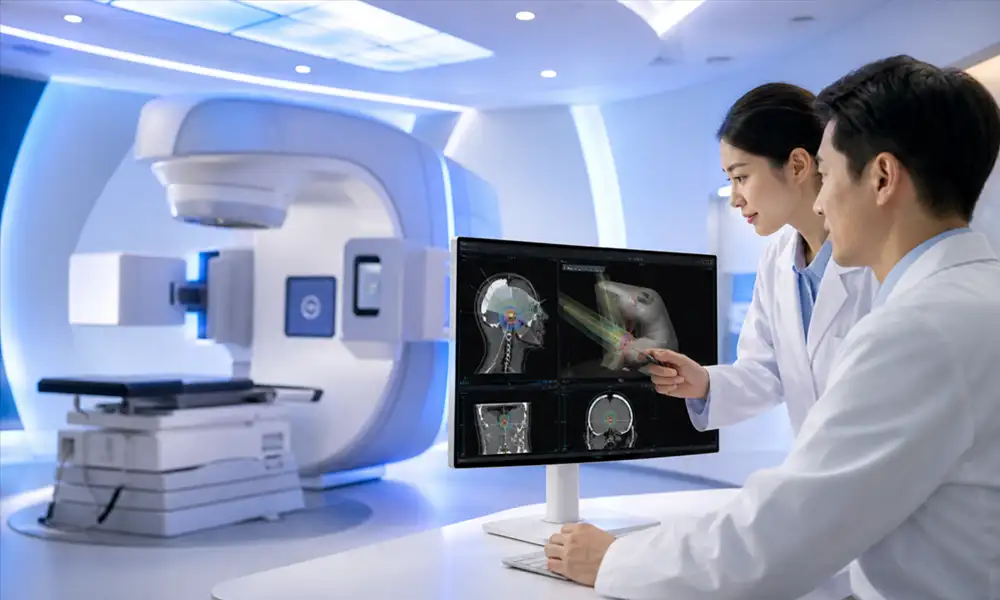
Fosun Health Cancer Radiotherapy Center relies on the precision tumor diagnosis and treatment platform of its affiliated hospitals and is equipped with M6 CyberKnife, VitalBeam linear accelerator and related imaging equipment. It can carry out image-guided radiotherapy, intensity-modulated radiotherapy, stereotactic radiosurgery and body stereotactic radiotherapy and other technologies. The center matches the patient with a more appropriate radiotherapy platform and segmentation method based on the tumor location, size, movement characteristics and distance from important organs.
Before treatment, radiotherapists, medical physicists and therapists will work together to complete image positioning, target area delineation, dose design and plan verification; during the treatment process, image verification is used to improve positioning consistency, and respiratory motion assessment and management can be combined with chest and abdominal motion-related lesions. For patients who have received radiotherapy in the past or whose lesions are close to important structures, it is also necessary to check the previous dose and strictly assess the risk of re-irradiation.
Radiation therapy can be used as the main treatment for some tumors, and can also be combined with surgery, chemotherapy, targeted therapy, immunity and minimally invasive intervention. Cyberknife is suitable for some lesions that are small in size, complex in location or move with breathing; modern linear accelerators are more suitable for larger and irregular target areas such as the whole breast, chest wall, pelvis or regional lymphatic drainage area. Equipment selection is based on indications and dosimetric evaluation, rather than simply pursuing fewer treatments or new equipment.
The center simultaneously pays attention to issues such as skin, mucous membranes, swallowing, nutrition, blood images, and pain during radiotherapy, and arranges necessary re-evaluations during the course of treatment. By standardizing quality control, adverse reaction management and post-treatment follow-up, we help patients minimize interruptions and control the amount of normal tissue while ensuring target area coverage.
The center’s radiotherapy applications in the following diseases
1. Head and neck tumors: Radiotherapy is usually the main local treatment for nasopharyngeal cancer; radiotherapy, surgery or comprehensive treatment can be used for tongue cancer, tonsil cancer, laryngeal cancer, nasal sinus and maxillary sinus malignant tumors according to the stage. Precise irradiation needs to focus on protecting the brainstem, spinal cord, visual pathways, salivary glands, and swallowing and vocal structures.
2. Chest tumors: Lung cancer, esophageal cancer, mediastinal and chest wall tumors can receive radiotherapy during radical treatment, pre-operative, postoperative or symptom relief stage. Some early-stage inoperable lung cancers can be evaluated for stereotactic radiotherapy; locally advanced lung cancer and esophageal cancer often require radiotherapy combined with drug therapy.
3. Abdominal and pelvic tumors: Rectal cancer, cervical cancer, endometrial cancer, bladder cancer, prostate cancer and some hepatobiliary and pancreatic tumors can be treated with external beam radiation, brachytherapy or stereotactic therapy according to the condition, focusing on controlling the dose of normal tissues such as the intestine, bladder, kidney, liver and bone marrow.
4. Central nervous system and other tumors: gliomas, malignant lymphomas, germ cell tumors, deep brain tumors, bone and soft tissue tumors, and bone metastases may all require radiotherapy. The specific use of conventional fractionation, intensity-modulated radiotherapy, M6 CyberKnife or other stereotactic techniques should be decided by the radiotherapy team based on the scope of the lesion and organ dose limitations.


