


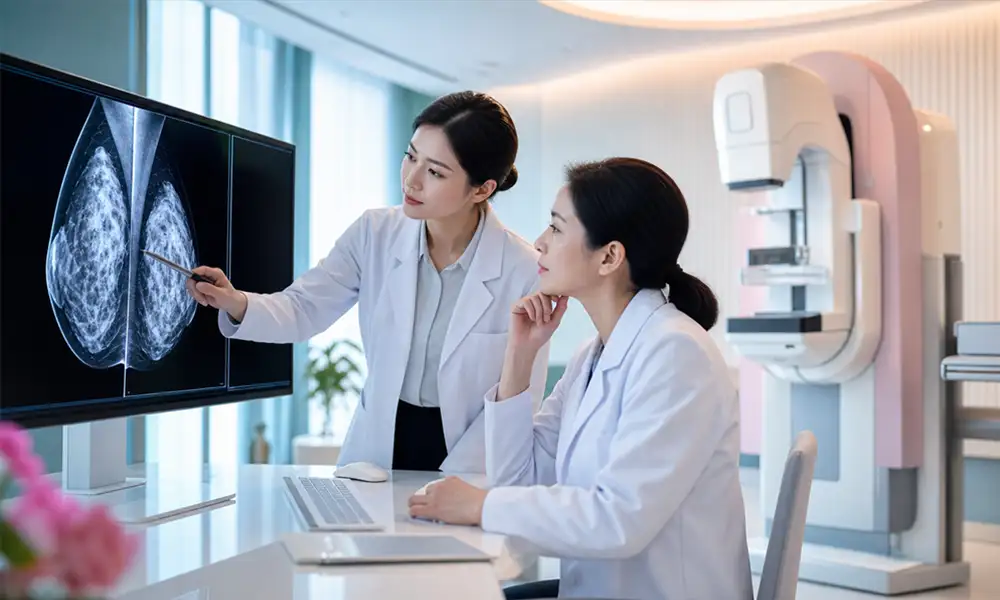
Fosun Health Breast Tumor Treatment Center relies on the breast surgery, breast medicine, imaging, pathology, radiotherapy and rehabilitation support capabilities of its affiliated hospitals to provide continuous services from screening, diagnosis to comprehensive treatment for benign and malignant breast diseases. The center can combine breast ultrasound, fully digital mammography and necessary needle biopsy to determine the nature of the lesion, and arrange follow-up diagnosis and treatment based on the imaging and pathological results.
For patients diagnosed with breast cancer, the team will conduct multidisciplinary discussions based on tumor size, location, lymph node status, stage, and biomarkers such as ER, PR, and HER2. Treatment options include breast-conserving surgery, total mastectomy, laparoscopic or robot-assisted surgery, sentinel lymph node biopsy, and breast reconstruction according to the indications, and a reasonable combination of radiotherapy, chemotherapy, targeted and endocrine therapy.
Relevant hospitals under Fosun Health have been equipped with equipment such as mammography, automatic breast volumetric ultrasound, vacuum-assisted rotational resection and near-infrared sentinel lymph node navigation, and carry out minimally invasive breast surgery, breast conservation and reconstruction technology. Whether it is suitable for minimally invasive, breast-conserving or reconstruction needs to be jointly judged based on the tumor extent, breast condition, genetic risk and patient wishes. A single device cannot replace standardized staging and pathological evaluation.
The center also attaches great importance to postoperative upper limb activities, lymphedema prevention, incision and breast appearance management, adverse drug reactions and recurrence follow-up. By arranging imaging and efficacy re-evaluation at key points in treatment, we help patients clearly understand the next step and try to protect breast appearance, upper limb function and quality of life while controlling tumors.
Common treatment pathways for breast cancer
1. Early stage breast cancer: Patients with stage I and II breast cancer can choose breast-conserving surgery combined with postoperative radiotherapy, or undergo total mastectomy depending on the extent of the disease. Current diagnosis and treatment also need to combine tumor size, breast condition, resection margin, lymph node status and patient's wishes to determine whether breast conservation is suitable, and reduce unnecessary axillary dissection through sentinel lymph node biopsy.
2. Locally advanced breast cancer: Stage III patients can receive neoadjuvant treatment first, and then be evaluated for modified radical resection, breast-conserving or reconstructive surgery, and radiotherapy and subsequent drug treatment will be arranged according to postoperative pathology. The specific plan needs to be formulated based on indicators such as ER, PR, HER2, and neoadjuvant treatment response.
3. Recurrent or metastatic breast cancer: Stage IV is mainly treated with chemotherapy and endocrine therapy. Modern treatment will also select endocrine, targeted, chemotherapy or other systemic treatments based on hormone receptor, HER2, BRCA and other results; for pain, bleeding or localized metastases, local treatments such as radiotherapy, surgery or ablation can be evaluated.


